Your Reading Guide
- Why Rabbits and Pools Are a Terrible Mix: The Physiology of a Non-Swimmer
- How Do Wild Rabbits Handle Water?
- The Ultimate Comparison: Rabbit vs. Other Pets in Water
- What If My Rabbit Falls In? Emergency Action Plan
- Safe Water Play and Hydration for Happy Bunnies
- Creating a Rabbit-Safe Backyard (Pool Owners, Listen Up!)
- The Final Splash: A Clear Conclusion
So you’re looking at your fluffy pet bunny, then at your backyard pool, and a question pops into your head. It’s a weird one, I know. Can bunny rabbits swim in a pool? I mean, they hop, they binky, they chew everything in sight… but swim? The short, direct answer is technically yes, but absolutely, positively, you should never let them try. It’s one of those “just because you can, doesn’t mean you should” situations, and for rabbits, it’s firmly in the “you really, really shouldn’t” category.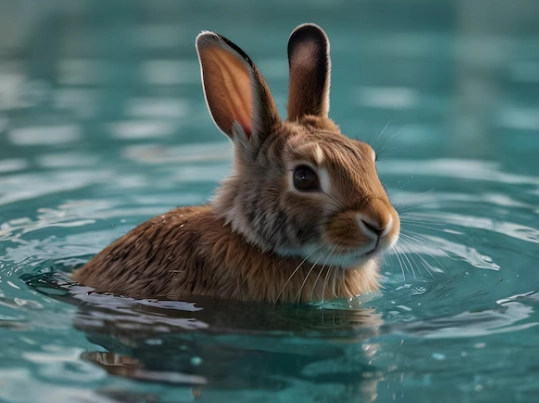
I remember a friend years ago who thought it would be funny to see if her Netherland Dwarf could paddle. Spoiler: it wasn’t funny. The panic, the frantic scrambling, the sheer terror in that little creature’s eyes—it was awful. She felt horrible, the bunny was traumatized, and it took days for him to get back to normal. That experience stuck with me and sent me down a rabbit hole (pun intended) of research. Let’s dive into why the idea of a bunny doing laps is a seriously bad one.
Core Takeaway: While rabbits possess a basic, instinctual doggy-paddle ability for survival in the wild, forcing a domestic rabbit to swim—especially in a chlorinated pool—is dangerous, highly stressful, and can be fatal. Their bodies and minds are not built for recreational swimming.
Why Rabbits and Pools Are a Terrible Mix: The Physiology of a Non-Swimmer
To understand why the question “can bunny rabbits swim in a pool” has such a grim answer, you need to look under the fur. A rabbit’s body is a masterpiece of evolution for life on land, not in water.
Think about it. They’re prey animals. Their entire existence is built around quick escapes on solid ground.
Built for the Burrow, Not the Beach
First, their fur. A rabbit’s coat is dense. Incredibly dense. It’s designed for insulation against cold. When it gets soaked, it becomes incredibly heavy, like wearing a water-logged winter coat. This weight drags them down, exhausting their muscles rapidly. It can also mat down, destroying its insulating properties and leading to a rapid drop in body temperature (hypothermia), even in seemingly warm pool water.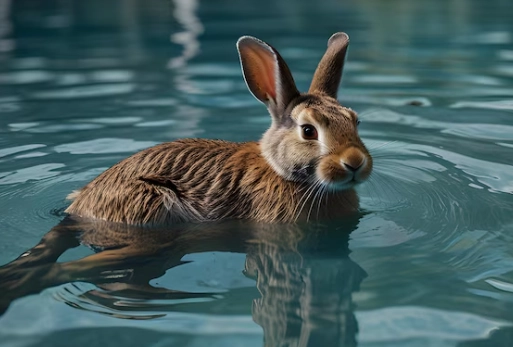
Then there’s the stress. Oh, the stress. Rabbits are notoriously delicate when it comes to stress. Their little hearts can beat over 200 times a minute when they’re calm; imagine that during a panic. Being thrust into water triggers a primal fear response. This sudden, intense stress can lead to a condition called cardiogenic shock, where the heart simply gives out. It’s a leading cause of sudden death in frightened rabbits. So even if they physically survive the swim, the psychological and physiological shock can kill them hours later.
Breathing is another issue. A panicking rabbit breathes rapidly. In water, the risk of inhaling water into their lungs is high, leading to aspiration pneumonia—a severe and often fatal lung infection.
Pool Chemicals: The Hidden Killer. This is a big one people overlook. Pool water isn’t just H2O. It’s loaded with chlorine, bromine, algaecides, and pH balancers. If a rabbit swallows this chemical cocktail while swimming, it can cause severe chemical burns to the mouth, esophagus, and stomach. Even just getting it in their eyes can cause significant irritation. And if they groom themselves afterward (which they will, obsessively), they ingest those toxins directly from their fur.
How Do Wild Rabbits Handle Water?
This is where the “technical yes” comes from. In the wild, a rabbit might be forced to cross a small stream or ditch to escape a predator. They can, in a life-or-death pinch, perform a frantic, inefficient doggy-paddle to get to the other side. It’s a last-resort survival mechanism, not a leisurely activity. They get out as fast as possible, shake off, and hope to dry quickly before hypothermia sets in. The Humane Society of the United States notes that wild rabbits are adept at avoiding hazards, and water is very much a hazard they navigate with extreme caution, not by choice.
Their wild cousins, swamp rabbits (found in the southern US), are better adapted to wet environments and are stronger swimmers, but they are the exception, not the rule. Your pet Dutch, Lionhead, or Flemish Giant shares almost none of those adaptations.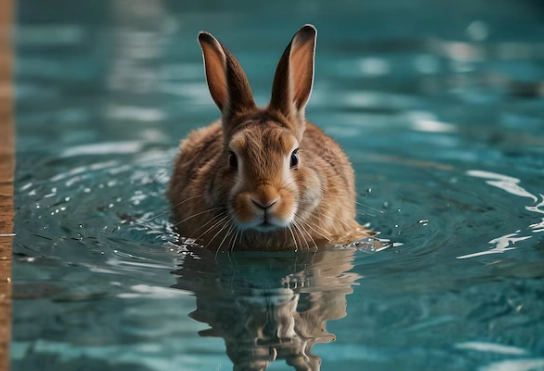
So, can bunny rabbits swim in a pool if their life depended on it? Maybe for 30 seconds. Should you ever test this? Never.
The Ultimate Comparison: Rabbit vs. Other Pets in Water
It helps to put this in perspective. We see dogs love water, some cats tolerate it, so why not bunnies? This table breaks down the brutal truth.
| Animal | Natural Relationship with Water | Key Physical Adaptations | Risk Level in a Pool |
|---|---|---|---|
| Dog (e.g., Retriever) | Often playful, bred for retrieving in water. | Water-resistant coat, webbed feet, strong endurance. | Low to Moderate (Supervision still required) |
| Cat | Generally avoidant; some breeds tolerate it. | Agile, can swim if necessary but hate it. Fur loses insulation when wet. | High (High stress, risk of drowning) |
| Rabbit | Pure avoidance. Water is an emergency escape route only. | Heavy, non-waterproof fur. Fragile bone structure. Extremely stress-prone physiology. | Very High to Severe (Risk of fatal shock, drowning, hypothermia, poisoning) |
| Duck | Thrives in water. | Waterproof feathers, webbed feet, buoyant body. | Very Low (Their natural element) |
See the difference? Rabbits are at the absolute bottom of the list for pool suitability. Putting a bunny in a pool is like putting a duck in a desert—it’s completely contrary to its basic design.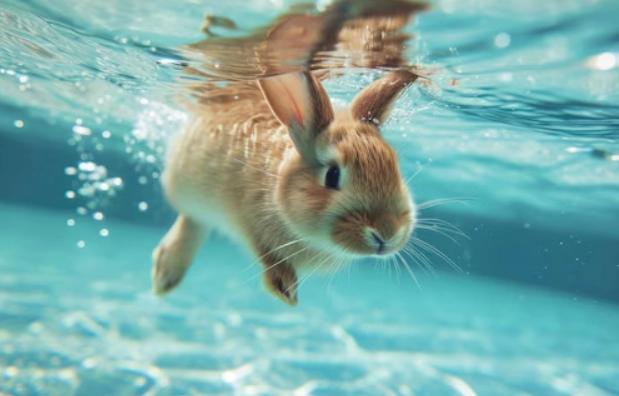
What If My Rabbit Falls In? Emergency Action Plan
Accidents happen. A bunny might hop too close to an uncovered pool, slip, and fall in. Knowing what to do in the first 60 seconds is critical. Panic is your enemy here.
- Get Them Out IMMEDIATELY. Don’t wait to see if they can swim. Scoop them out with a pool net, your hands, anything. Time is critical to prevent water inhalation and shock.
- Keep Them Warm. Wrap them immediately in a thick, dry, absorbent towel. Gently blot and squeeze (do not rub vigorously) to remove as much water from the fur as possible. Their core temperature will be plummeting.
- Dry Thoroughly. Use a hairdryer on the lowest, coolest setting, holding it at least a foot away. Constantly move it and keep your hand between the dryer and the rabbit’s skin to test the heat. The goal is to dry the undercoat completely to prevent hypothermia.
- Watch for Signs of Distress. For the next 24-48 hours, monitor closely:
- Labored, wheezy, or clicking breathing (sign of water inhalation/pneumonia).
- Lethargy, not moving, hunched posture.
- Loss of appetite or not drinking.
- Continued shivering.
- CALL YOUR VET, NO MATTER WHAT. This is non-negotiable. Even if your rabbit seems okay, the internal effects of stress, potential water inhalation, and chemical ingestion are invisible. Your vet may prescribe antibiotics to prevent pneumonia or provide supportive care. The House Rabbit Society’s vet directory is a great resource to find a rabbit-savvy professional if you don’t have one.
My friend’s rabbit, the one I mentioned earlier, seemed “fine” after his ordeal. He was quiet for a day but then bounced back. Or so we thought. A week later, he stopped eating. The vet diagnosed stress-induced GI stasis, a gut shutdown that’s deadly for rabbits. He pulled through after intensive care, but it was a long, expensive, and frightening lesson. The pool incident was the direct trigger.
Safe Water Play and Hydration for Happy Bunnies
Just because they shouldn’t swim doesn’t mean they don’t need or enjoy water! Their relationship with water should be safe, controlled, and on their terms.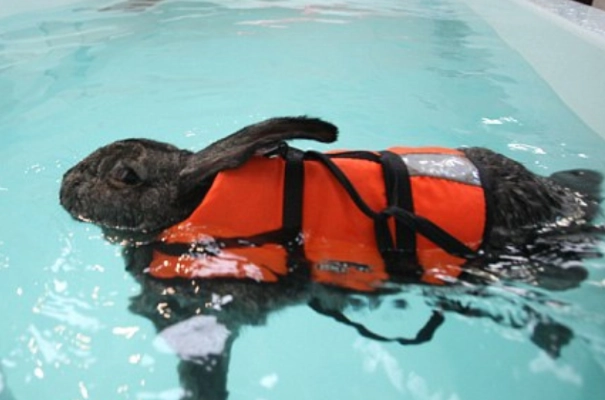
The Right Way to Hydrate and Cool Your Rabbit
On a hot day, you want to help your bunny cool down. Here’s how to do it safely, without ever asking “can bunny rabbits swim in a pool”.
- Ceramic Tile or Slate: Place a chilled tile (put it in the fridge for an hour) in their enclosure. They love to sprawl on the cool surface.
- Frozen Water Bottles: Wrap a frozen plastic water bottle in a thin towel. They’ll lean against it to transfer the coolness.
- Damp Towel Petting: Dampen a cloth with cool water and gently stroke their ears (where rabbits release heat) and back. Don’t soak them; just a light dampness.
- Misting: A very fine mist from a spray bottle in the air above them can cool the ambient temperature. Avoid spraying them directly in the face.
- Fresh, Cool Water Always: This is the most important. Provide unlimited fresh water in a heavy ceramic bowl (they drink more from bowls than bottles). Check it multiple times a day in summer.
I’ve tried the frozen bottle trick with my own rabbit, Barnaby. He was skeptical at first—a new, cold object in his kingdom—but within minutes he was flopped right next to it, his back pressed against the towel. It works.
What About a Shallow “Paddle Pool”?
Some websites suggest a shallow dish with an inch of water for them to step in. I’m hesitant. Most rabbits will avoid it. If they do step in, they’ll likely shake their paws immediately and groom obsessively. If you use tap water, it’s low risk, but monitor for stress. Honestly, the tile and frozen bottle methods are less messy and less anxiety-inducing for them. Why force a water experience when there are better alternatives?
Creating a Rabbit-Safe Backyard (Pool Owners, Listen Up!)
If you have a pool and a free-roam or supervised backyard bunny, security is paramount. Rabbits are curious and can hop surprisingly far and high.
A fence isn’t just a suggestion; it’s a lifesaver.
- Secure Pool Fencing: Ensure your pool is surrounded by a fence at least 4 feet high with self-closing, self-latching gates. The gaps should be too small for a rabbit to squeeze through (check the bottom!).
- Pool Covers: Use a solid, rigid safety cover when the pool is not in use. Avoid flimsy solar covers that a rabbit could fall through and become trapped underneath.
- Supervision is Key: Never leave your rabbit unsupervised in a yard with an uncovered pool, even for “just a minute.”
- Provide Shade & Escape: Ensure your bunny has plenty of shaded areas and a clear, easy path back to its safe indoor enclosure or hutch. A panicked rabbit won’t think clearly.
The Final Splash: A Clear Conclusion
The curiosity behind “can bunny rabbits swim in a pool” is understandable. But the answer, when you look past the basic physical capability, is a complex web of “no.” It’s a firm, veterinary-backed, welfare-focused no. Their physiology is all wrong for it, their psychology is shattered by it, and the risks—from fatal shock and drowning to hypothermia and chemical poisoning—are far too great.
Our job as rabbit guardians is to provide a safe, enriching, and low-stress life. Throwing them into a pool is the antithesis of that. Stick to the cool tiles, the frozen bottles, the gentle ear mists. Keep that pool securely covered and fenced. Love your bunny for the amazing, hopping, land-loving creature it is, and leave the swimming to the ducks.
Let’s make the answer to this question common knowledge, so no other rabbit has to experience that kind of fear. Share this guide, talk to other rabbit owners, and let’s keep our bunnies happy, healthy, and dry.
Honestly, after all this research and remembering my friend’s scare, the whole idea just makes me sad. We have so many wonderful ways to bond with and care for our rabbits that don’t involve terrifying them. Why even flirt with the one thing that could end in tragedy? The pool will always be there. Your bunny’s trust and well-being are far more fragile.
So, the next time that quirky question crosses your mind—can bunny rabbits swim in a pool—I hope you’ll remember this deep dive. The water might look inviting to you, but for them, it’s a cold, heavy, chemical-filled nightmare. Let’s be the protectors they need us to be.
Reader Comments