Quick Guide
- So, What Exactly Is a Jack Rabbit? Breaking Down the Basics
- The Main Players: Different Types of Jackrabbits
- Home on the Range: Where Do Jackrabbits Live?
- Built for Speed: The Anatomy of a Jackrabbit
- A Day in the Life: Jackrabbit Behavior
- Why Jackrabbits Matter: Their Role in the Ecosystem
- Jackrabbit vs. Rabbit: The Ultimate Showdown
- Common Questions People Have About Jackrabbits
- Conservation Status and Challenges
You've probably heard the name, maybe even seen one blur across a field or a desert road. But when someone asks, "what is a jack rabbit?" most people just think, "a big rabbit." That's like calling a wolf a big dog – it misses the entire point. I remember the first time I really saw one, not just a glimpse, but watched it. I was hiking in the Southwest, and this creature stood frozen, its impossibly long ears swiveling like satellite dishes. Then it was gone, a streak of brown and white. It wasn't just fast; it was a different kind of animal entirely. So let's settle this. A jack rabbit isn't technically a rabbit at all. It's a hare. That's the first and most important thing to understand. They're not your average backyard bunny.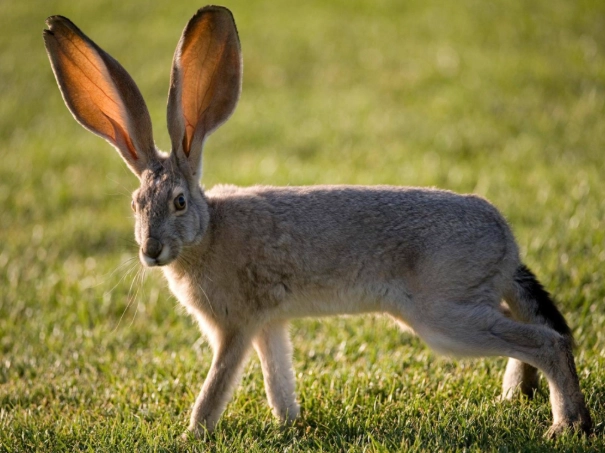
So, What Exactly Is a Jack Rabbit? Breaking Down the Basics
Let's get scientific for a second, but I promise to keep it painless. All jackrabbits are hares in the genus Lepus. The name itself is thought to be a shortening of "jackass rabbit," coined by early settlers because of the animal's long, mule-like ears. They're part of the order Lagomorpha, which includes rabbits, hares, and pikas. The critical rabbit vs. hare distinction comes down to birth. Baby rabbits (kittens) are born blind, hairless, and completely dependent. Baby hares (leverets) are born fully furred, eyes open, and ready to move within a short time. Jackrabbits hit the ground running, literally.
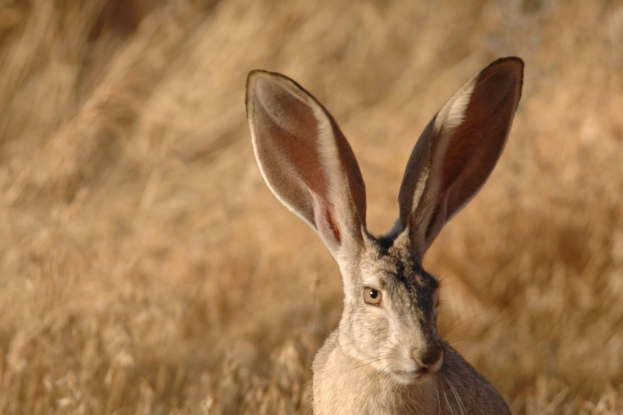
Their entire biology is built for survival in open, often harsh environments. Those legendary ears? They're not just for hearing predators from a mile away (though they do that brilliantly). They're giant radiators. A network of blood vessels helps dissipate heat, which is a lifesaver in the scorching deserts many call home. Their fur is another masterpiece of adaptation – a grizzled mix of browns, grays, and white that provides near-perfect camouflage against dirt and dry grass.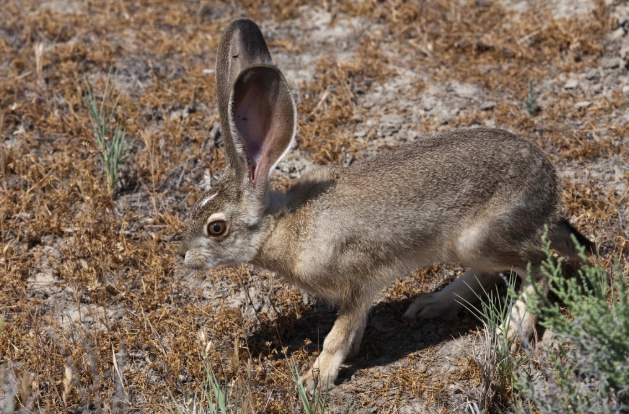
The Main Players: Different Types of Jackrabbits
Not all jackrabbits are the same. In North America, a few species steal the show. Knowing which is which adds a whole new layer to understanding what a jack rabbit is.
The Black-Tailed Jackrabbit
This is probably the most widespread and iconic. You'll find it from the Great Plains west to California and down into Mexico. Its name gives away its key feature: a distinct black stripe running along the top of its tail. It's a master of grasslands, desert scrub, and farmland. I've seen them more often than any other type, often sitting perfectly still in a field, believing they're invisible (and they usually are).
The White-Tailed Jackrabbit
This one is the cold-weather specialist. Found in the Great Plains and up into Canada, it's larger and turns brilliant white in the winter (except for those ear tips, which stay black). It's a testament to how adaptable the "jack rabbit" concept is, thriving in snowy conditions where its cousin the black-tailed would struggle.
The Antelope Jackrabbit
If the others are athletes, the Antelope Jackrabbit is the superstar. Native to the deserts of the Southwest, particularly Arizona and Sonora, Mexico, it's famous for its breathtaking speed and unique behavior. When fleeing, it can flash the bright white fur on its flanks, which might serve to confuse predators. It's also less dependent on hiding and more on pure, unadulterated speed and agility.
Quick Comparison of Common Jackrabbit Species
| Feature | Black-Tailed Jackrabbit | White-Tailed Jackrabbit | Antelope Jackrabbit |
|---|---|---|---|
| Primary Habitat | Grasslands, Desert Scrub, Farmland | Prairies, Open Grasslands (colder climates) | Arid Deserts, Scrubland |
| Key Identifying Trait | Black stripe on top of tail | Pure white tail, white winter coat | Largest ears, white flanks flashed when running |
| Size | Medium-Large | Largest (in North America) | Large, very long legs & ears |
| Geographic Range | Western & Central North America | Northern Great Plains, Canada | Southwestern US (AZ, NM), Northern Mexico |
Home on the Range: Where Do Jackrabbits Live?
You won't find a jack rabbit in a dense forest. Their world is the wide-open space. Think deserts, prairies, sagebrush flats, agricultural fields, and even open woodlands. They need room to run and a clear line of sight. Their survival strategy is based on spotting danger early and outrunning it, not ducking into a burrow. They'll use depressions in the ground or rest under shrubs (these spots are called "forms"), but they don't dig complex burrow systems like rabbits.
This preference for open land has shaped their relationship with humans. As agriculture spread, jackrabbits sometimes found a bonanza of food in crops, leading to their reputation as pests in some areas. On the other hand, urban sprawl and habitat fragmentation are real threats. It's a complicated balance.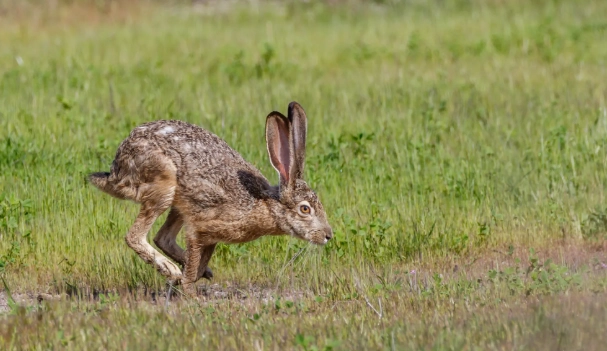
Built for Speed: The Anatomy of a Jackrabbit
Every part of a jack rabbit answers the question of survival in a dangerous, open world.
- Legs: This is the most obvious. Their hind legs are massively powerful, acting like springs. They can leap 10-20 feet in a single bound and reach speeds of over 40 mph in short bursts. Watching them run is a zig-zagging, bounding spectacle designed to throw off pursuing coyotes or birds of prey.
- Ears: We've touched on this, but it's worth repeating. Those ears can be up to 6-7 inches long. They provide acute hearing and critical temperature regulation. On a cool day, you might see them hold their ears close to their body to conserve heat.
- Eyes: Positioned high and on the sides of their head, they have a nearly 360-degree field of vision. They can see predators coming from almost any direction without moving their head.
- Diet & Digestion: They're herbivores, primarily eating grasses, herbs, shrubs, and, when available, agricultural crops. Like all lagomorphs, they practice coprophagy – eating special soft fecal pellets to re-digest food and extract maximum nutrients. It's not pretty, but it's highly efficient for their high-fiber diet.
A Day in the Life: Jackrabbit Behavior
Jackrabbits are mostly crepuscular – most active at dawn and dusk. During the heat of the day, they'll rest in their form. They're generally solitary, though you might see several in a good feeding area. Communication is subtle: foot thumping to signal alarm, various body postures, and maybe some low vocalizations. Breeding is where things get intense. The phrase "breeding like rabbits" should honestly be "breeding like hares." Females can have several litters per year, with 1-6 leverets each. This high reproductive rate is necessary because just about everything out there wants to eat them.
Why Jackrabbits Matter: Their Role in the Ecosystem
Calling them "just a rabbit" ignores their immense ecological importance. They are a keystone prey species. What does that mean? It means a huge web of life depends on them.
Predators that rely on jackrabbits as a primary food source include: Coyotes, foxes, bobcats, large birds of prey (eagles, hawks, owls), snakes, and even badgers. A healthy jackrabbit population often indicates a healthy predator population. I've seen areas where a decline in hares led to increased predation pressure on other small animals, throwing things out of whack.
They're also important herbivores. Their feeding habits help shape plant communities, and their droppings return nutrients to the soil. They are a vital link in the food chain, transforming plant matter into energy for a wide array of carnivores.
Jackrabbit vs. Rabbit: The Ultimate Showdown
This is a constant source of confusion. Let's clear it up once and for all. When you're trying to figure out what is a jack rabbit compared to a cottontail rabbit, here’s your cheat sheet.
| Characteristic | Jackrabbit (Hare) | Common Rabbit (e.g., Cottontail) |
|---|---|---|
| Birth State | Precocial: Born furred, eyes open, mobile. | Altricial: Born hairless, blind, helpless. |
| Living Quarters | Uses shallow "forms" on the surface. | Lives in underground burrows or warrens. |
| Build | Larger, leaner, with longer legs & ears. | Smaller, more compact, rounder appearance. |
| Social Tendency | Mostly solitary. | Often more social, living in groups. |
| Primary Defense | Speed and endurance in open terrain. | Hiding, freezing, and short bursts to a burrow. |
See? Totally different lifestyles. A cottontail is built to hide; a jackrabbit is built to run.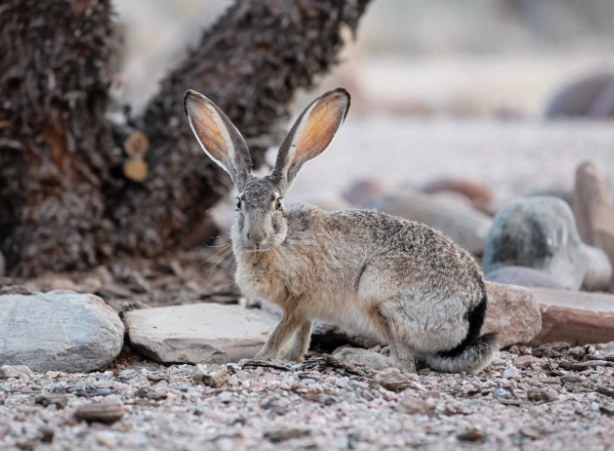
Common Questions People Have About Jackrabbits
Here are the things people really want to know after learning the basics of what a jack rabbit is.
Are jackrabbits dangerous?
Can you have a jackrabbit as a pet?
What should I do if I find a baby jackrabbit alone?
Why are they called "jack" rabbits?
How can I attract or observe jackrabbits responsibly?
Are jackrabbits a problem for my garden?
Conservation Status and Challenges
Most jackrabbit species are currently considered species of "Least Concern" by the IUCN, meaning their overall populations are stable. But that's a broad brush. Local populations face real pressures.
Habitat loss from agriculture and development is a constant. Climate change, altering precipitation patterns in arid regions, could affect food availability. Disease outbreaks can also impact local groups. The White-tailed Jackrabbit, for instance, has seen range contractions in some parts of its territory. Continuous monitoring is essential. Organizations like the Arizona-Sonora Desert Museum are deeply involved in researching and conserving desert species like the Antelope Jackrabbit.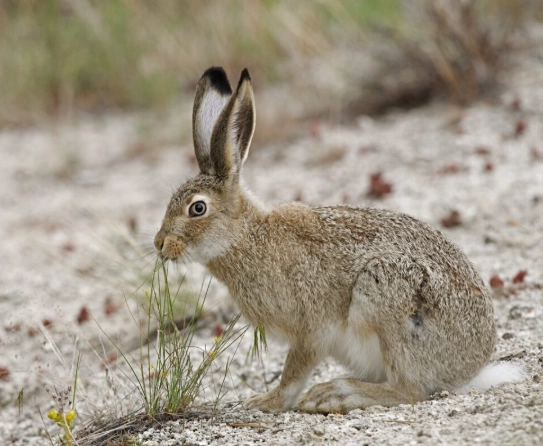
So, what is a jack rabbit? It's not a simple question with a one-word answer. It's an icon of American wilderness, a marvel of evolutionary engineering, a crucial piece of our ecosystems, and a symbol of raw speed and survival. They're the hares that taught us what it means to be built for the open road, long before we even invented roads. Next time you see one, you'll see more than just a big rabbit. You'll see a survivor, perfectly tuned to its world.
It's funny. We spend so much time looking for exotic animals, but sometimes the most incredible creatures are right there in the empty lot or the desert wash, living a life of high-speed drama just under our noses. The jackrabbit is one of those. A true original.
Comment