Your Quick Guide
- It's All in the Wiring: The Feline Predatory Instinct
- The Risk Factor Checklist: When "Will It Happen?" Becomes More Likely
- Can They Ever Live Together? The Cautious Path to Cohabitation
- Protecting Wild Rabbits and Outdoor Pet Rabbits
- Answering Your Real-World Questions (FAQ)
- Wrapping This Up: A Matter of Management, Not Morality
Okay, let's just get straight to the point. You're probably here because you've got a cat, maybe you're thinking of getting a rabbit, or perhaps a wild bunny has taken up residence in your yard and you've seen your feline friend giving it the look. That intense, still, laser-focused stare. It's unnerving, right? The question burning in your mind is simple, direct, and a bit brutal: will a cat eat a rabbit?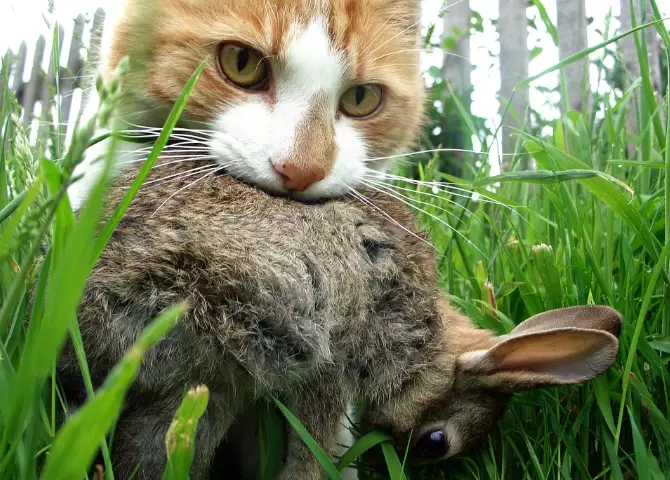
The short, uncomfortable answer is yes. A cat absolutely can and, if driven by its instincts and opportunity, will eat a rabbit. I wish I could sugarcoat it, but that's the reality of having a tiny, adorable predator sharing your home. It's not about your cat being "evil" or "mean." It's biology, hardwired over thousands of years. But—and this is a huge but—whether this scenario plays out in your living room or garden depends on a ton of factors. It's not a foregone conclusion. Understanding those factors is the difference between constant anxiety and managing a potentially safe, if carefully balanced, situation.
I remember a friend who thought her fat, lazy, indoor Persian would never hurt a fly. Then one day, a mouse got in. The transformation was instant and shocking. That's the instinct we're dealing with.
It's All in the Wiring: The Feline Predatory Instinct
To really get why this is even a question, we have to dive into what makes a cat, a cat. You can't train this out of them. You can only manage it.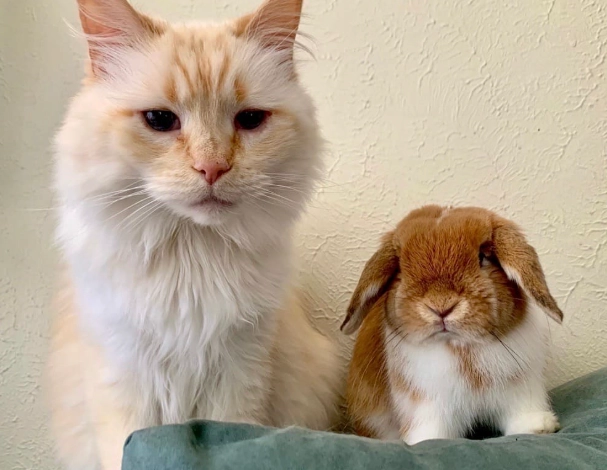
Domestic cats (Felis catus) share over 95% of their DNA with their wild ancestors. They are obligate carnivores, meaning their bodies are designed to need meat and their brains are wired to obtain it through hunting. The sequence is flawless: stalk, chase, pounce, kill, and then maybe eat. This sequence is triggered by movement, particularly quick, jerky, small-animal-like movement. A rabbit hopping? That's basically a giant, fluffy trigger.
Studies, like those referenced by the American Society for the Prevention of Cruelty to Animals (ASPCA), classify predatory behavior as a natural, fundamental feline activity separate from hunger. It's a need. So when you wonder, "will my cat eat a rabbit?", you're really asking if your cat's environment and management will override millions of years of evolutionary programming.
Some breeds have a stronger "prey drive" than others. Bengals, Abyssinians, and Siamese are often cited as having high drives. But don't let that fool you into thinking your docile Ragdoll is exempt. Under the right (or wrong) circumstances, the switch can flip.
The Rabbit's Side of the Equation: Not Just a Helpless Ball of Fluff
We often think of rabbits as utterly defenseless, but that's not entirely fair. A healthy, full-sized adult rabbit, especially in an open area, can be surprisingly formidable. They have powerful hind legs for kicking and can reach speeds of 35 mph in short bursts. In the wild, their main defense is evasion—zigzag running and diving into burrows.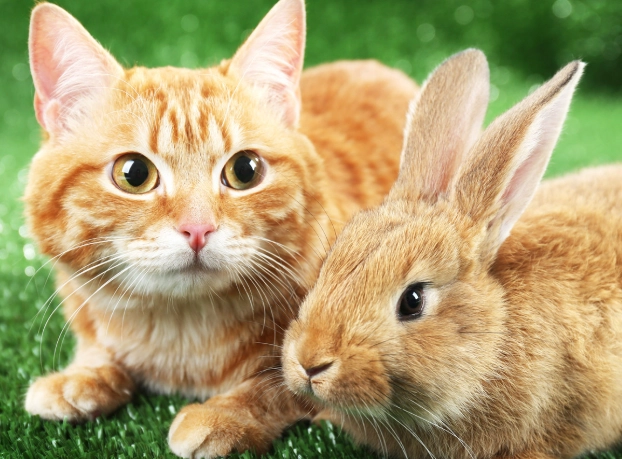
But here's the catch in a domestic setting. Pet rabbits are often confined (hutches, pens, even free-roam in a room), which removes their primary defense: running away. A startled rabbit may also freeze, which ironically can trigger a cat's pounce reflex. Furthermore, baby rabbits (kits), sick, elderly, or injured rabbits are at exponentially higher risk. Their movement is slower or more erratic, making them an easier target.
The size difference matters too. A large Flemish Giant rabbit might give a cat pause simply due to its size. A tiny Netherland Dwarf? That looks a lot more like prey.
The Risk Factor Checklist: When "Will It Happen?" Becomes More Likely
Let's break this down practically. Not every cat-rabbit interaction ends badly. But some situations are powder kegs. I've put together this table to visualize the risk landscape. It's not perfect, but it gives you a concrete way to assess your own scenario.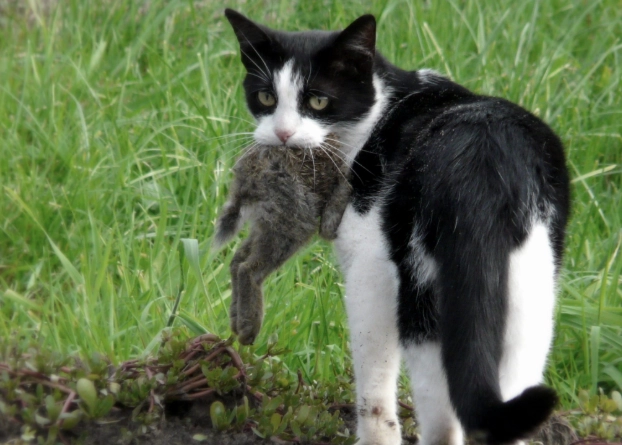
| Risk Factor | High-Risk Scenario | Lower-Risk Scenario | Why It Matters |
|---|---|---|---|
| Cat's History & Personality | Cat is a proven hunter (brings home birds/mice). High-energy, playful/aggressive breed. | Cat has never shown interest in toys or laser pointers. Is older, lethargic, raised with rabbits. | Past behavior is the single best predictor. A hunter cat sees a rabbit as prey, not a friend. |
| Rabbit's Profile | Baby (kit), very small breed, skittish/runs often, injured/sick. | Large, calm adult rabbit, confident, moves slowly. | Erratic or vulnerable movement triggers the chase. Size can be a deterrent. |
| Environment & Introduction | Sudden introduction. Rabbit in an open, exposed cage or free in a room with cat. Outdoors. | Extremely slow, scent-first introduction over weeks. Rabbit has a completely cat-proof sanctuary. | Control is everything. Outdoor settings are the highest risk zone for a fatal encounter. |
| Supervision Level | Left completely alone together. Unsupervised outdoor access. | 100% supervised during interactions, or species are never physically mixed. | A cat's predatory sequence can complete in seconds. Unsupervised = unacceptable risk. |
Looking at that, it gets clearer. The classic nightmare scenario is a young, hunting-minded cat with unsupervised access to a hutch containing a baby rabbit. That's asking for tragedy.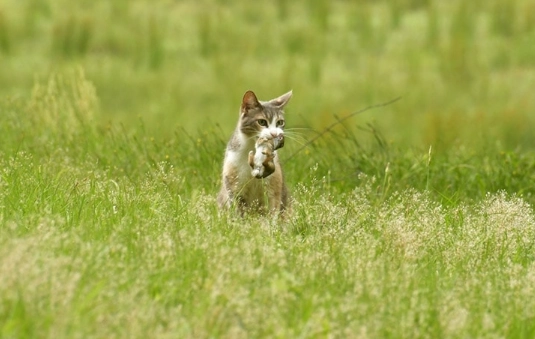
That study always makes me pause. It's one thing to think about your own pets, another to realize the broader ecological impact. It's a tough pill to swallow for cat lovers.
Can They Ever Live Together? The Cautious Path to Cohabitation
You'll see wildly optimistic videos online—a cat cuddling with a rabbit, grooming it. It happens. But treating those videos as a standard or a goal is dangerous. They are the exception, not the rule, and usually the result of incredibly careful, slow work and specific animal personalities.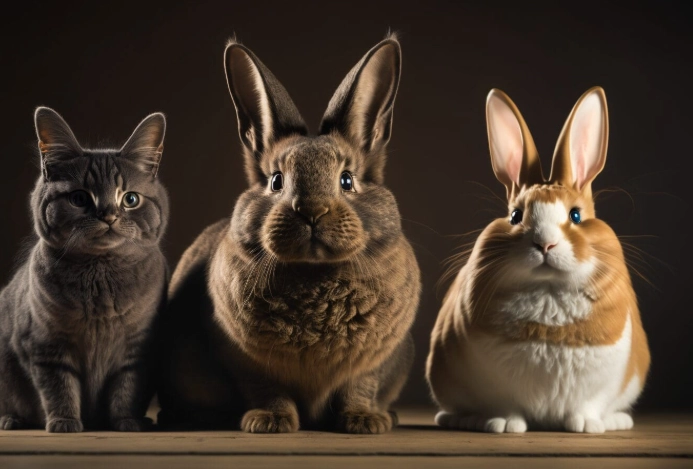
If you are determined to try (and I mean, you already have both animals and are seeking a solution, not thinking of getting them for the purpose of being friends), here's a more realistic, step-by-step approach. Forget friendship; aim for peaceful indifference and safety.
A No-Nonsense Introduction Protocol
- Absolute Separation First: Keep them in separate rooms for at least 1-2 weeks. No visual contact. Let them get used to each other's smells under the door. Swap bedding so the smell becomes familiar, not alarming.
- Barrier Introduction: Use a sturdy baby gate or a screen door. The rabbit's enclosure should be in the room, with the cat outside it. Feed them both high-value treats on their respective sides. Watch the body language. Is the cat staring fixated, body low, tail twitching? Bad sign. Is it glancing then looking away, more interested in the treat? Better sign. The rabbit should be eating and not thumping or hiding in terror.
- Controlled, Leashed Meetings: This is advanced. Have the cat in a secure harness and leash, held by a second person. Allow the rabbit to be in the open room. Keep sessions very short (2-5 minutes). The goal is calmness, not interaction. If the cat lunges or the rabbit panics, end it immediately and go back a step.
- The Reality Check: Even after all this, you may never be able to leave them alone together. Many owners who "successfully" have cats and rabbits simply never allow them physical access when unsupervised. The rabbit has a cat-proof room or enclosure the cat cannot enter. This is the safest long-term "cohabitation" model.
I tried a version of this with an old, chill cat and a bold rabbit. It worked to a point—they ignored each other. But I never, ever left them in the same room alone if I left the house. The risk wasn't worth the peace of mind.
Protecting Wild Rabbits and Outdoor Pet Rabbits
This is where the question "will a cat eat a rabbit" moves from theoretical to a direct conservation and welfare issue.
For Wild Rabbits: The most effective thing you can do is keep your cat indoors. It's better for the cat (less disease, injury, shorter lifespan outdoors) and for local wildlife. If you're adamant about outdoor time, consider a secure "catio" or supervised walks on a harness. Bell on the collar? Studies are mixed on their effectiveness. A determined cat learns to move without ringing it.
For Outdoor Pet Rabbits: A hutch alone is not enough. Many cats can and will reach into hutches, terrorizing the rabbit inside (which can die from sheer shock/stress, a condition called capture myopathy). Your rabbit's enclosure must be fortress-like:
- Sturdy Hardware Cloth (not chicken wire, which cats can rip) over all openings.
- A fully enclosed run with a roof and wire buried into the ground to prevent digging in/out.
- Location in an open area, not hidden by shrubs where a cat can stalk unseen.
- Bringing the rabbit indoors at night, when many predators, including cats, are most active.
The RSPCA and other welfare organizations have excellent guidelines on predator-proof housing. It's not just cats; it's foxes, birds of prey, etc. A proper hutch is a life-saving investment.
Answering Your Real-World Questions (FAQ)
Extremely common. Remember the predatory sequence: stalk, chase, pounce, kill. For many domestic cats, the sequence ends at the "kill" (or even the catch). The "eat" part is driven by hunger. A well-fed cat may simply lose interest after the "game" is over, or may be unsettled by the larger size of the rabbit compared to a mouse. They might present it to you as a "gift." This doesn't mean it was harmless—the rabbit could be mortally wounded or die from stress.
First, secure your cat indoors. Then, approach the rabbit quietly. Do not assume it's dead. Injured wild animals are terrified and can bite. Wear thick gloves. Gently place the rabbit in a ventilated, dark box (a towel in the bottom) and contact a local licensed wildlife rehabilitator immediately. Do not try to give it food or water. Time is critical. For a pet rabbit, get to an emergency vet right away, even if you see no visible wounds. Internal injuries and shock are killers.
It's risky to aim for this. What looks like bonding (cat grooming rabbit) can sometimes be the cat treating the rabbit as a subordinate, or even an attempt to stimulate a "kill" site on the neck. The rabbit may tolerate it out of fear. I'm skeptical of most online bonds. Peaceful coexistence is a much safer, more achievable goal than a Disney-esque friendship.
This is your best-case scenario for lowering risk. A kitten socialized with a calm rabbit during its key socialization period (2-7 weeks) may grow up seeing the rabbit as part of its "family" rather than prey. However—and this is a massive however—the kitten's innate prey drive will still emerge as it matures. You must continue supervision for life. Never get complacent. The dynamic can change in an instant when the kitten becomes a hormonally-driven adolescent cat.
This is the ethical question every cat owner grapples with.
I don't think it's cruel if you provide proper enrichment. Cruelty is boredom. You can satisfy the stalk-chase-pounce-kill sequence entirely indoors with interactive play. Wand toys that mimic birds and mice, puzzle feeders that make them "hunt" for kibble, scheduled play sessions. A cat that gets a 20-minute vigorous play session before bed is a happy, tired cat. The Humane Society of the United States strongly advocates for indoor cats for their safety and longevity. The hunting urge is a need for the *behavior*, not necessarily the outdoor environment.
Wrapping This Up: A Matter of Management, Not Morality
So, after all this, where do we land on the original question? Will a cat eat a rabbit? The biological capacity and instinct are undeniably present. In an uncontrolled environment, the outcome is often tragic for the rabbit.
But as the person in charge, you control the environment. You decide if your cat goes outdoors. You design the rabbit's housing. You manage introductions. You provide the play that drains predatory energy. The question transforms from "will it happen?" to "what am I doing to prevent it?"
It boils down to respect. Respect for your cat's nature—don't put it in a situation where its instincts force a terrible choice. And respect for your rabbit's vulnerability—don't make it live in a state of perpetual fear. Sometimes, the kindest and most responsible answer is to keep them as separate, loved members of your family, each thriving in their own safe space.
That might not be the heartwarming answer you hoped for, but in my experience, it's the one that keeps everyone alive and well. And really, isn't that the point?
Comment