Quick Navigation
- The Science Behind Rabbit Vision: Cones, Rods and Evolution
- Rabbit Vision vs. Human Vision: A Side-by-Side Comparison
- So, What Colors CAN Rabbits See Best? The Practical Palette
- Beyond Color: The Other Superpowers of Rabbit Sight
- Common Questions Rabbit Owners Actually Ask (FAQ)
- Applying This Knowledge: Making Your Rabbit's World Better
- Wrapping Up: Seeing the World Through Their Eyes
You're looking at your rabbit, wondering what's going on behind those big, shiny eyes. They're not just cute—they're complex optical systems built for survival. If you've ever asked yourself "what colors do rabbits see?", you're not alone. It's a question that pops up for every curious rabbit owner. I remember watching my first rabbit, Thumper, completely ignore a bright red ball but go nuts for a piece of green kale. It made me stop and think. Was it the smell? The taste? Or was it simply how the kale looked to him?
Turns out, the answer is a mix of all those things, but vision plays a huge part. Rabbit vision is a masterpiece of evolutionary adaptation, and understanding it changes how you see your pet. It's not about them seeing in "black and white"—that's a huge oversimplification. Their world has color, just a different palette than ours.
Core Insight: Rabbits are not colorblind in the way we typically think. They are dichromats. This means they have two types of color-sensitive cone cells in their retinas, compared to our three. So, when we ask "what colors do rabbits see?", the answer is: primarily blues and greens, with reds appearing as a dark yellow or grey. Their world is less about rainbows and more about contrasts in the blue-green spectrum, which makes perfect sense when you consider their natural grassland habitat.
The Science Behind Rabbit Vision: Cones, Rods, and Evolution
Let's get into the nuts and bolts. To really grasp what colors do rabbits see, we need to talk about photoreceptors. The retina at the back of the eye contains two main types: rods and cones.
Rods handle low-light vision and motion detection. Rabbits have loads of these, which is why they see so well at dawn and dusk (crepuscular activity, anyone?) and can spot the slightest twitch of a predator from afar. Cones are for color vision and detail in bright light. Humans are trichromats (three cone types: red, green, blue). Dogs are dichromats (two cone types). Rabbits? Also dichromats.
Research, including studies referenced by institutions like the RSPCA on general animal senses, suggests that the rabbit's two cone types are most sensitive to blue and green wavelengths. The cone for perceiving long wavelengths (what we see as red and orange) is either missing or very weak.
Here’s a simple way to think about it. Imagine your TV or phone. You have a setting for color saturation. Turn the "red" saturation all the way down. The blues and greens remain vibrant, but anything red, orange, or pink becomes muted, greyish, or a shade of dark yellow. That's a rough approximation of a rabbit's color view.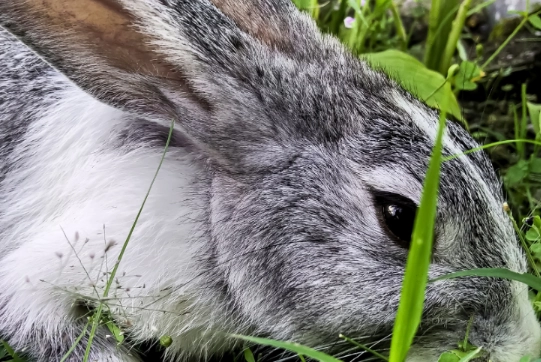
Myth Buster: "Rabbits see only in black and white." This is flat-out wrong. Early 20th-century assumptions led to this myth, but modern comparative ophthalmology has proven it false. They have a functional, if limited, color vision system. Calling it black and white does a disservice to their complex visual abilities.
Why did they evolve this way? Think like a prey animal. Your life depends on spotting predators in low light and differentiating between edible greenery and toxic plants. Sharp motion detection and contrast sensitivity in the blue-green range are far more critical than appreciating a scarlet sunset. Their vision is utilitarian, not artistic.
Rabbit Vision vs. Human Vision: A Side-by-Side Comparison
It's helpful to put things in a table. This isn't about who sees "better," but about understanding different design specs for different life purposes.
| Visual Feature | Human Vision | Rabbit Vision | Practical Implication for Rabbits |
|---|---|---|---|
| Color Spectrum | Trichromatic (Full-color: Reds, Greens, Blues) | Dichromatic (Primarily Blues & Greens; Reds appear dull) | Excellent for discriminating between types of foliage and spotting sky-based predators. |
| Visual Acuity (Sharpness) | Very High (20/20 is standard) | Low (Estimated 20/200 to 20/400) | Objects are blurry beyond a few feet. Relies on motion and contrast, not fine detail. |
| Field of View | ~180 degrees | Nearly 360 degrees (Over 300° with a small blind spot) | Can see almost all around them without moving their head—critical for detecting predators. |
| Depth Perception | Excellent (Binocular vision in central field) | Poor (Narrow binocular field directly in front) | Judging distances for jumps can be tricky. They often "measure" with whiskers. |
| Low-Light Vision | Poor | Excellent (High rod density) | Most active at dawn/dusk (crepuscular). Sees well in dim conditions. |
| Motion Detection | Good | Extremely Sensitive | Can detect the slightest movement at great distances, a primary survival tool. |
Looking at this, you start to see the trade-offs. We sacrificed panoramic view and night vision for sharp, detailed, colorful central vision. Rabbits did the opposite. Their world is a wide, slightly blurry, blue-and-green-tinted panorama where movement screams for attention. So, when you wonder what colors do rabbits see, remember it's just one piece of a much larger sensory puzzle.
So, What Colors CAN Rabbits See Best? The Practical Palette
Let's get practical. Based on the dichromatic model, here’s a breakdown of how rabbits likely perceive common colors. This isn't just academic—it can influence your choices for toys, bedding, and even how you arrange their space.
The Blues and Purples
This is where their vision likely shines (pun intended). Blues and violets probably appear clear, distinct, and vibrant. A blue toy might stand out nicely against green hay or brown flooring. Some rabbit owners anecdotally report their buns showing more interest in blue items, though individual personality is always a factor.
The Greens and Yellows
Greens are a major part of their visual landscape. Different shades of green help them distinguish between fresh, tasty greens and drier, less palatable vegetation. Yellows, which stimulate both the green and (weak) long-wavelength cones, probably appear as a bright, noticeable color as well. That yellow banana treat? It likely looks quite appealing visually, even before the sweet smell kicks in.
The Reds, Oranges, and Pinks
This is the muted zone. Without a strong red cone, these long wavelengths get lumped in. A bright red apple slice or an orange carrot might appear as a dark, muddy yellow, brown, or grey. It's not invisible, but it lacks the "pop" it has for us. This is a crucial point when asking what colors do rabbits see—they don't see "red" as red. This debunks the old cartoon idea of rabbits being enraged by the color red. It just doesn't register that way.
Practical Takeaways for Rabbit Owners
- Toys & Accessories: Opt for toys in blue, green, yellow, or natural wood colors. They might be more visually engaging than red or pink toys.
- Choosing Hay: They rely more on smell and texture here, but the greenness of hay is a visual cue of freshness, aligning with their ability to see greens well.
- Spotting Urine/Health Issues: Since reds are dull, don't rely on your rabbit to visually avoid red-tinged urine (a sign of potential problems). Keep their habitat clean and check regularly yourself.
Beyond Color: The Other Superpowers of Rabbit Sight
Fixing on what colors do rabbits see misses their visual superpowers. Color is a minor act in their sensory play. The headliners are elsewhere.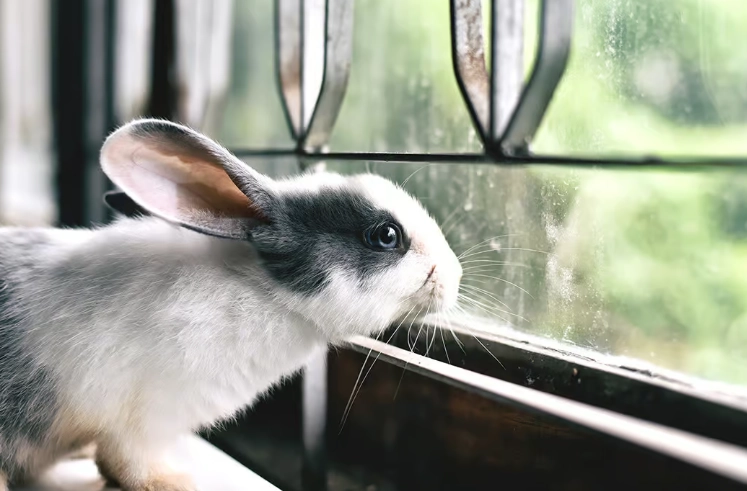
Motion Detection: This is their number one visual skill. Their retinas are wired to amplify movement. A hawk shadow shifting slightly, a blade of grass twitching—it all triggers an immediate alert. This is why sudden, fast movements from us can scare them, while slow, predictable ones are calming.
The Panoramic View: Their eyes are placed high and on the sides of their head. This gives them that incredible near-360° view. They have a small blind spot directly in front of their nose and right behind their head. That's why it's polite to approach from the front where they can see you, and why they might not see a treat placed directly under their chin.
Low-Light Excellence: All those rods make them crepuscular champions. Their world comes alive in the dim light of morning and evening. This is their natural time to forage and socialize. Ever notice your rabbit getting the "zoomies" at dusk? That's their natural rhythm kicking in, aided by vision that works great in that light.
Common Questions Rabbit Owners Actually Ask (FAQ)
Let's tackle the real-world questions that pop up after someone learns the basics of what colors do rabbits see.
Applying This Knowledge: Making Your Rabbit's World Better
Understanding what colors do rabbits see isn't a trivia fact. It's a tool for better care.
1. Approach Them Gently: Remember their motion sensitivity. Move slowly and predictably, especially from their front visual field. Avoid looming over them from directly above (a predator's angle).
2. Enrichment Ideas: Use their visual strengths. Hide treats in piles of hay (foraging in green/brown textures). Use toys that move in unpredictable ways (like a hanging ball they can bat) to engage their motion detection in a fun way. Tunnels and cardboard castles work with their love of safe, enclosed spaces and don't rely on color.
3. Habitat Setup: Ensure their enclosure has hiding places with more than one exit. This caters to their prey-animal psychology—they always need an escape route they can see. Avoid placing their hideout in a complete visual dead-end.
4. Bonding: Get down on their level. Let them come to you. They can see and assess you better when you're not a giant, blurry figure towering above. Sit on the floor with some greens and let them explore you on their terms.
Want to Dive Deeper? The science of animal vision is constantly evolving. For peer-reviewed studies on comparative vision, databases like those from the National Institutes of Health (NIH) are invaluable. For rabbit-specific care and behavior that incorporates their sensory world, organizations like the House Rabbit Society are fantastic, evidence-based resources.
Wrapping Up: Seeing the World Through Their Eyes
So, what's the final answer to what colors do rabbits see? A world rich in blues and greens, muted in reds and oranges, supremely attuned to motion, breathtakingly wide in scope, and perfectly functional in the half-light. It's a world designed not for admiring art, but for staying alive long enough to find the next meal and raise the next litter.
Knowing this, you stop seeing their occasional skittishness as a flaw and start seeing it as a marvel of biology. You understand why they might prefer one toy over another, or why they stare at something you can't see. It deepens the connection. You're not just caring for a cute ball of fur; you're interacting with a creature whose entire experience of reality is fundamentally different from your own.
That's the real value of asking the question. It's not just about color charts. It's about empathy. It's about building an environment that respects who they are, not who we imagine them to be. And honestly, I think that makes them even more fascinating.
Next time you look into your rabbit's eyes, you'll know there's a complex, ancient, and highly specialized visual processor behind them. One that sees a different, but no less real, world.
Comment