Let's cut straight to the chase. If you're picturing snuggling a rabbit like a teddy bear while you watch TV, you're setting yourself up for disappointment. The simple, honest answer is that most domestic rabbits do not inherently enjoy being cuddled, picked up, or restrained. That image of a blissful bunny in someone's arms? It's the exception, not the rule. But before you feel disheartened, understanding why is the first step to building a genuinely close, trusting relationship with your rabbit—one that might eventually include some forms of affectionate contact, but on their terms.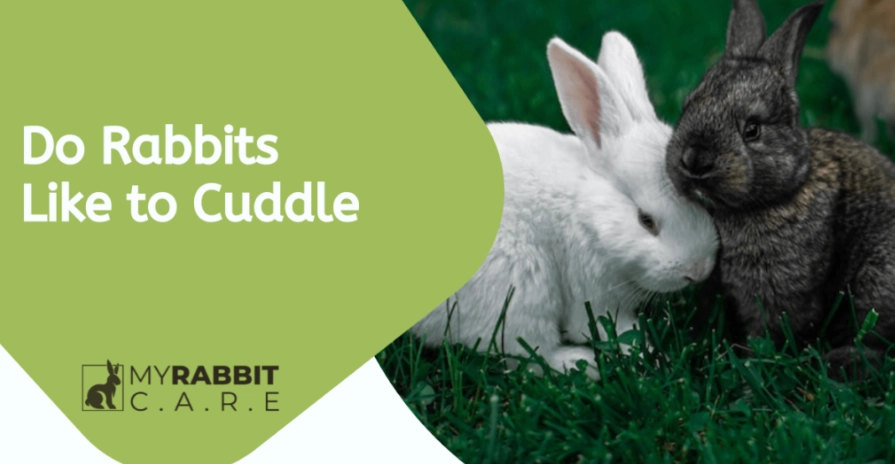
What's in This Guide?
The Honest Answer: Most Rabbits Don't
Rabbits are prey animals. Their entire evolutionary history is built around escaping predators. Being lifted off the ground triggers a primal panic response—it simulates being snatched by a hawk. While domestication has tempered some instincts, this core wiring remains strong. A rabbit that tolerates being held is often just that: tolerating it, not enjoying it. Signs of "enjoyment" like going limp can actually be a fear response called "tonic immobility," a last-ditch survival tactic. Mistaking this for contentment is one of the biggest errors new owners make.
Key Insight: Forcing cuddles on an unwilling rabbit doesn't just make them unhappy; it actively damages your bond. It teaches them that your hands equal stress and loss of control, making future positive interactions harder.
Why Do Rabbits Dislike Being Held?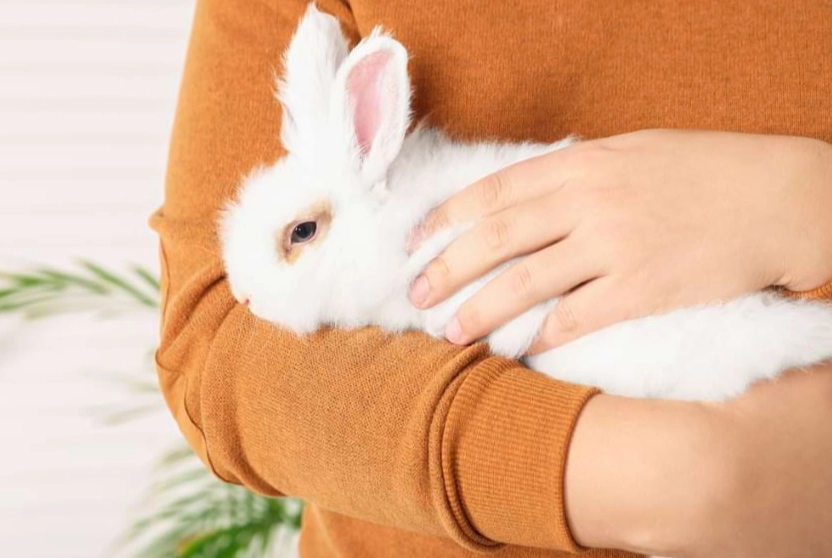
It's not personal. It's biology and physics.
Prey Animal Psychology: Their eyes are on the sides of their head for a wide field of vision, not for depth perception. Being up high feels unstable and dangerous. Their hearing is extremely sensitive, and the sound of a human heartbeat or breathing from such close range can be overwhelming.
Physical Structure: Rabbits have powerful hind legs and a lightweight skeletal structure. Improper support (like holding them under the armpits with legs dangling) can cause serious spinal injuries if they kick out. They need to feel fully supported along their spine and hindquarters to feel remotely secure, and even then, many hate it.
Think about it from their perspective. Would you enjoy being suddenly scooped up by a giant fifty times your size, lifted into the air where you have no escape, and then squeezed? Probably not.
How to Read Your Rabbit's Body Language
This is the most critical skill you can learn. Rabbits communicate constantly through posture and movement. Ignoring these signals is like trying to have a conversation with someone while ignoring their words.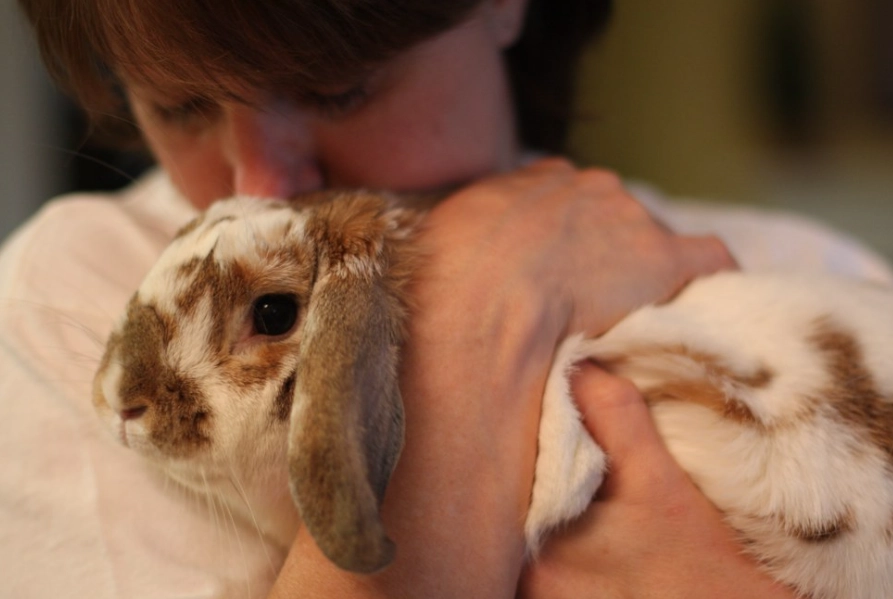
Signs Your Rabbit is Stressed or Scared (Stop What You're Doing!)
- Thumping: The classic danger signal. A loud thump with a hind foot.
- Running Away/Hiding: The most obvious "no." Chasing them destroys trust.
- Wide, Bulging Eyes: Shows whites of the eyes ("whale eye").
- Flattened Ears pressed tightly against the back.
- Grunting/Growling: A low, guttural sound.
- Scratching/Biting: A last resort when other signals are ignored.
- Freezing in Place: Not calm stillness, but tense, rigid immobility.
Signs Your Rabbit is Relaxed and Open to Interaction
- Flopping: Dramatically falling onto their side. The ultimate sign of trust and relaxation.
- Purring/Tooth Clicking: A soft, gentle grinding sound made when content, often during gentle petting.
- Chinning: Rubbing their chin on you or objects. They're marking you as "theirs" with scent glands.
- Circling Your Feet: Can be a sign of affection or excitement (especially if unfixed).
- Nudging You Gently: Asking for attention or pets.
- Licking/Grooming You: A huge sign of affection and acceptance into their "warren."
- Ears in a Neutral or Curious Position: Not pinned back, not rigidly forward, just relaxed.
| Body Part | "I Like This" Signal | "I'm Stressed" Signal |
|---|---|---|
| Ears | Relaxed, swiveling gently | Pinned flat back, rigidly forward |
| Eyes | Soft, half-closed | Wide open, showing whites |
| Posture | Flopped, stretched out, loafed | Crouched low, tense, frozen |
| Nose | Slow, steady wiggles | Very fast wiggles or completely still |
| Teeth | Soft, rhythmic grinding (purring) | Loud, harsh grinding (pain/fear) |
How to Bond with Your Rabbit (Without Forcing Cuddles)
Real bonding happens on the floor, at their level. This is where you become a source of good things, not stress.
Stage 1: Become Furniture
Sit or lie quietly in their safe space (a pen or rabbit-proofed room). Ignore them. Read a book, scroll on your phone. Let them investigate you on their own time. No grabbing. This teaches them your presence is non-threatening.
Stage 2: The Bribery Phase
Offer high-value treats from your hand: fresh cilantro, a small piece of banana, or a pellet. Keep your hand low and still. Let them come to you. This associates your hands with positive outcomes. The House Rabbit Society has excellent guides on treat training and bonding.
Stage 3: Learn Their Petting Map
Most rabbits love being petted—but only in specific spots and when they choose. The golden zones are usually the forehead, cheeks, and base of the ears. Many enjoy strokes down the back. Almost all rabbits hate having their belly, feet, or chin touched initially. Let them position themselves. A rabbit that puts its head down near you is often asking for forehead pets.
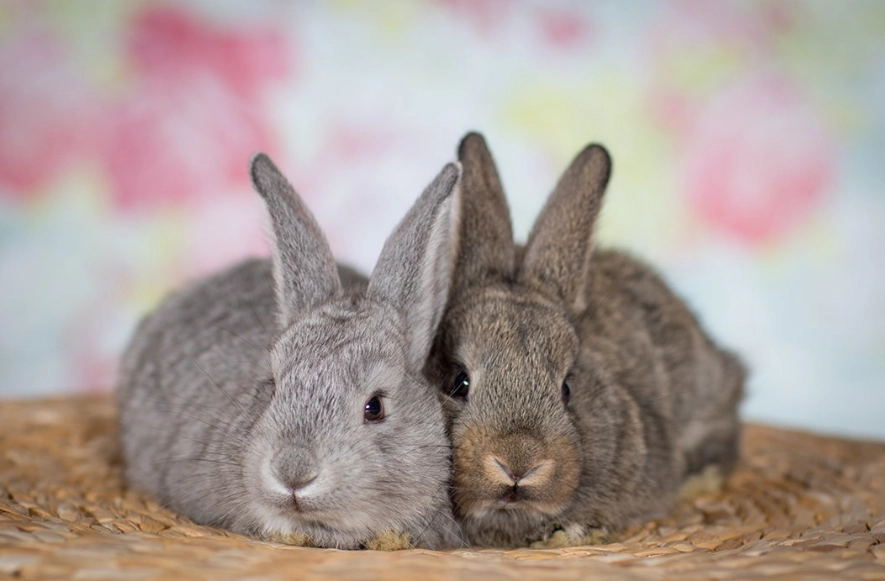
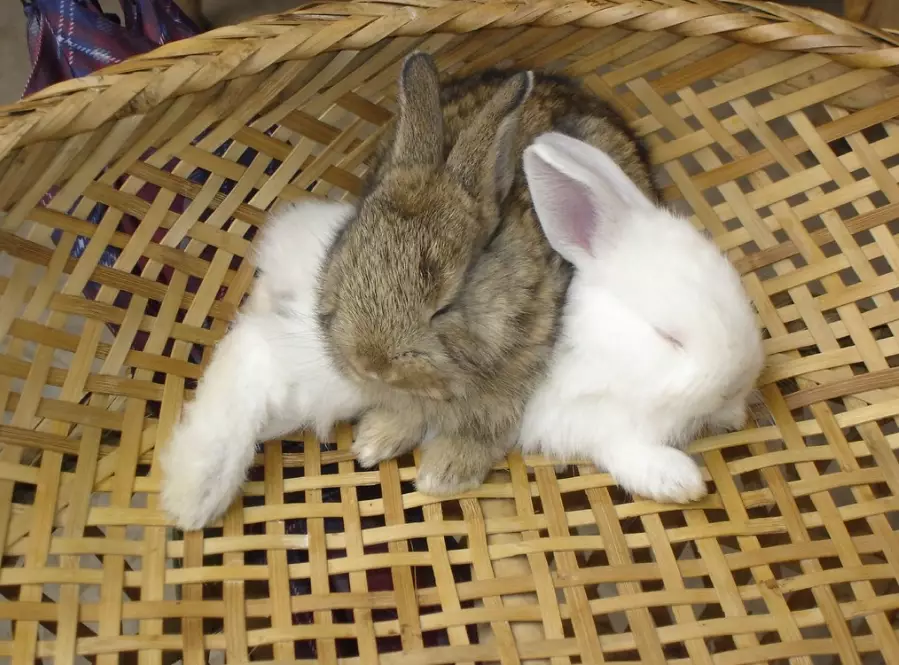
Pro Tip from a Long-Time Owner: The best "cuddle" with a rabbit often looks like this: you're sitting on the floor, and your rabbit chooses to come lie down pressed against your leg or side. They are in full control, can leave anytime, but choose your company. This is a far deeper sign of affection than any forced hold.
Stage 4: Handling for Necessity
You will need to pick up your rabbit for vet visits, nail trims, or health checks. Do it calmly, quickly, and with maximum support: one hand under the chest, the other fully supporting the hindquarters and bottom, holding them securely against your body. Reward immediately after with a treat. This minimizes trauma for necessary tasks.
FAQs About Rabbits and Affection
 How can I tell if my rabbit is "purring" because it's happy or grinding its teeth in pain?
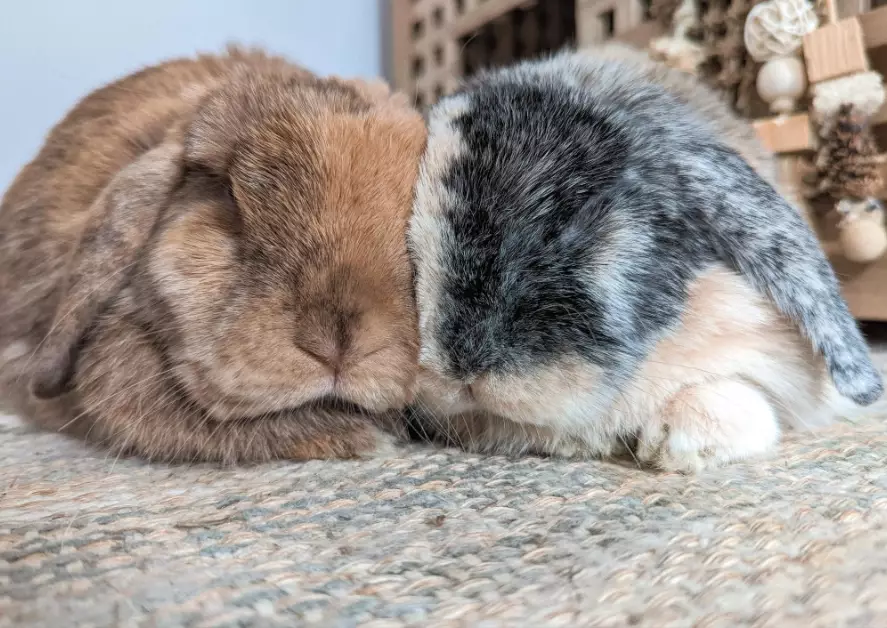 The journey with a rabbit isn't about molding them into a cuddly toy. It's about learning a new, subtle language of trust. When you stop chasing the Hollywood cuddle and start listening to what your rabbit is actually telling you, you open the door to a relationship that's genuinely rewarding. You'll find affection in a quiet nose nudge, the gentle weight of them leaning against you, or the soft sound of contented tooth purring as you stroke their forehead. That's the real magic of living with a rabbit.
Reader Comments