Let's cut to the chase. No, you should not feed your rabbit store-bought or homemade coleslaw mix. It's a bad idea, and I've seen too many well-meaning owners cause their bunnies unnecessary digestive grief by assuming "it's just shredded veggies." The problem isn't just the cabbage—it's everything else that comes with it. A rabbit's digestive system is a finely tuned engine designed for one thing: processing vast amounts of fiber from hay. Introduce the wrong fuel, and that engine sputters, stalls, or worse.
I remember my first rabbit, Ginger, a curious Dutch. Early on, I made the mistake of thinking a tiny bit of salad bar leftovers was a harmless treat. The gas and discomfort she experienced that night was a harsh, unforgettable lesson. Coleslaw mix is a minefield for rabbits, posing risks far beyond a simple tummy ache.
What You'll Learn in This Guide
Why Coleslaw Mix is a Danger, Not a Treat
Break down a typical bag of pre-made coleslaw mix. You'll find shredded green and red cabbage, maybe some carrots. Seems innocent, right? Here's where most guides stop, but the real danger is in the dressing and the preparation.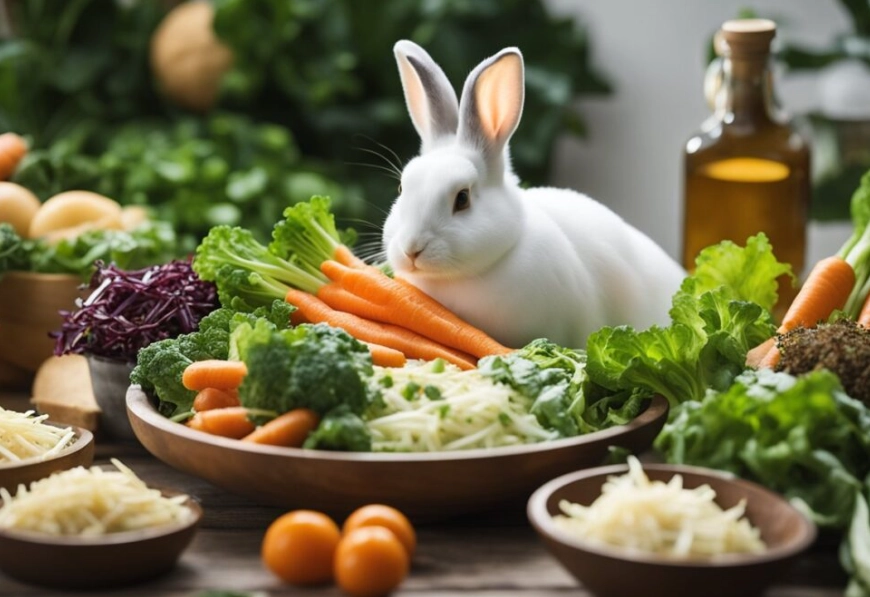
The Hidden Killers in Coleslaw: Mayo, vinegar, sugar, salt, onion powder, garlic powder. Even in trace amounts, these are toxic or highly disruptive to rabbits. Onions and garlic can cause hemolytic anemia, damaging red blood cells. Sugar and salt disrupt gut flora and lead to dehydration.
Even if you rinse it (which most people don't think to do), you'll never remove all the oil and seasoning. The cabbage itself, now coated in fat, becomes harder to digest. Rabbit digestion relies on specific bacteria fermenting fiber. Introduce fat and oil, and you inhibit those bacteria, setting the stage for GI stasis—a life-threatening slowdown of the gut.
Then there's the shredding. Finely shredded vegetables oxidize and break down faster. This can introduce bacterial contaminants that a robust human gut handles easily but can overwhelm a rabbit's sensitive system.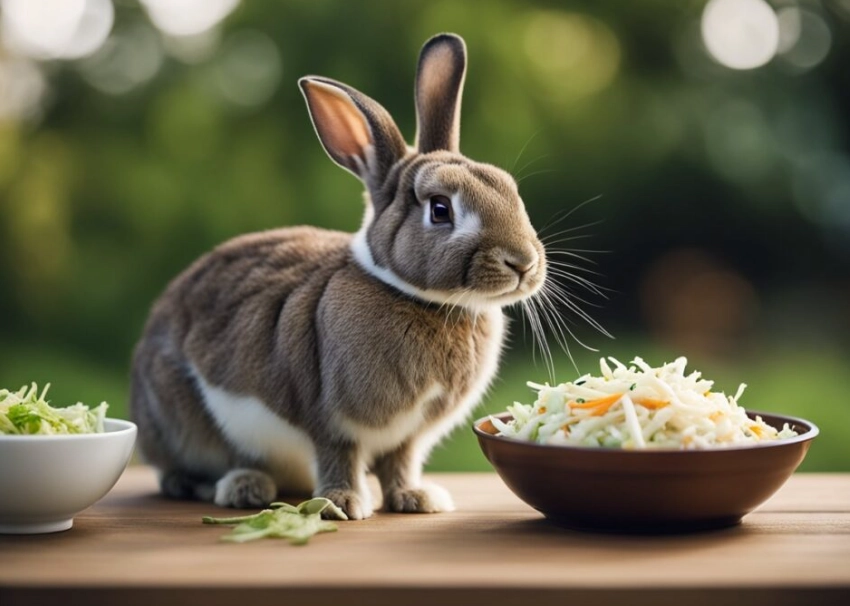
The Gas Problem You're Not Thinking About
Cabbage belongs to the cruciferous family (broccoli, kale, Brussels sprouts). These veggies contain complex sugars called raffinose. Rabbits lack the enzyme to break this down efficiently. In the hindgut, bacteria ferment it, producing excessive gas. For a creature that can't vomit or burp effectively, this gas is trapped, causing painful bloat (gastrointestinal tympany).
In a coleslaw mix, the problem compounds. The dressing can cause initial inflammation, and the gassy cabbage expands on that, creating severe discomfort. I've had clients rush in with rabbits hunched in pain, and the culprit was often "just a spoonful" of something like this.
Plain Cabbage: A Conditional Yes, With Strict Rules
So, the coleslaw mix is out. What about plain, fresh cabbage you shred yourself? Here, the answer is nuanced. It's not toxic, but it's not a top-tier rabbit vegetable either. Think of it as an occasional, small-portion item, not a daily staple.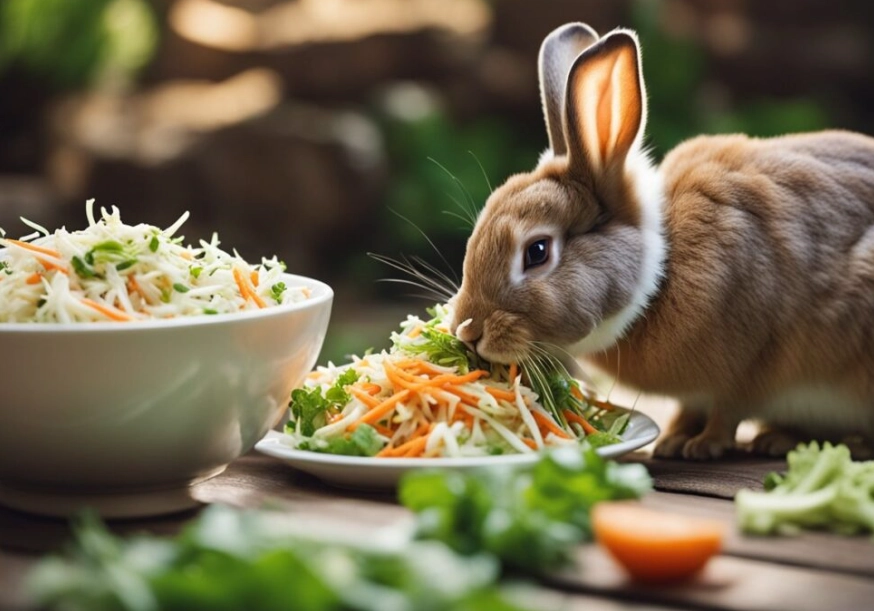
Key Rule: Cabbage should never exceed 5% of your rabbit's daily fresh food intake. The foundation (85-90%) must always be unlimited grass hay (timothy, orchard, meadow).
Not all cabbage is equal. Green cabbage is typically gassier than red or savoy cabbage. Introduce any new vegetable, especially cabbage, one at a time and in a tiny amount (one thin slice). Watch for soft stools or reduced hay consumption over the next 24 hours. If you see either, cabbage isn't for your bun.
| Cabbage Type | Safety Rating | Recommended Max Serving (for a 6lb rabbit) | Notes from Experience |
|---|---|---|---|
| Red Cabbage | Moderate | 1-2 small leaves, 2x per week | Lower gas potential than green. Rich in antioxidants, but still a treat. |
| Green Cabbage | Low-Moderate | 1 small leaf, 1x per week | Highest gas risk. Many bunnies do poorly with it. I usually suggest skipping it. |
| Savoy Cabbage | Moderate | 1-2 small leaves, 2x per week | Wrinkled leaves. Slightly easier to digest, but same rules apply. |
| Napa/Bok Choy | Higher | 1-2 large leaves, 3x per week | The white stalk (petiole) is often better tolerated than leafy cabbage heads. A better choice. |
A common mistake is treating the "outer leaves" as waste and feeding them to the rabbit. Those outer leaves are often the most contaminated with pesticides or dirt. Always wash thoroughly and feed the inner, cleaner leaves.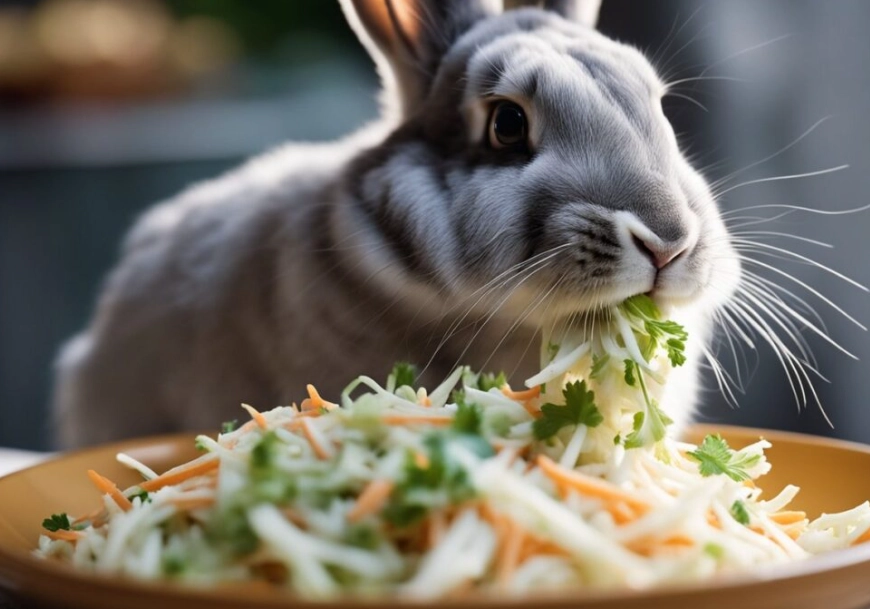
Superior & Safer Vegetable Alternatives
If you're looking for the crunchy, hydrating texture of coleslaw mix but want safety, you have fantastic options. These vegetables are lower in problematic sugars and higher in beneficial nutrients with less risk of gas.
Your Go-To Rabbit Salad Bar:
- Romaine Lettuce, Green Leaf, Red Leaf Lettuce: The absolute staples. High water content, low oxalates, well-tolerated. Avoid iceberg—it's mostly water with little nutrition.
- Bell Peppers (any color): Remove the seeds and stem. Fantastic source of Vitamin C, sweet and crunchy. A huge hit with most bunnies.
- Fennel: The licorice-tasting bulb. Has a natural soothing effect on the digestive tract. Shreds beautifully for a "slaw" texture.
- Broccoli Leaves (not the florets): The dark green leaves from the broccoli plant are excellent. The florets themselves are very gassy, so stick to the leaves.
- Celery: Cut into tiny pieces to avoid stringy fibers causing choking. Great for teeth and hydration.
- Fresh Herbs: Cilantro, parsley, dill, mint, basil. Packed with flavor and nutrients, very low risk.
You can create a delicious, safe "rabbit slaw" by finely slicing romaine, a bit of fennel, and some cilantro. No dressing needed—the natural juices are enough.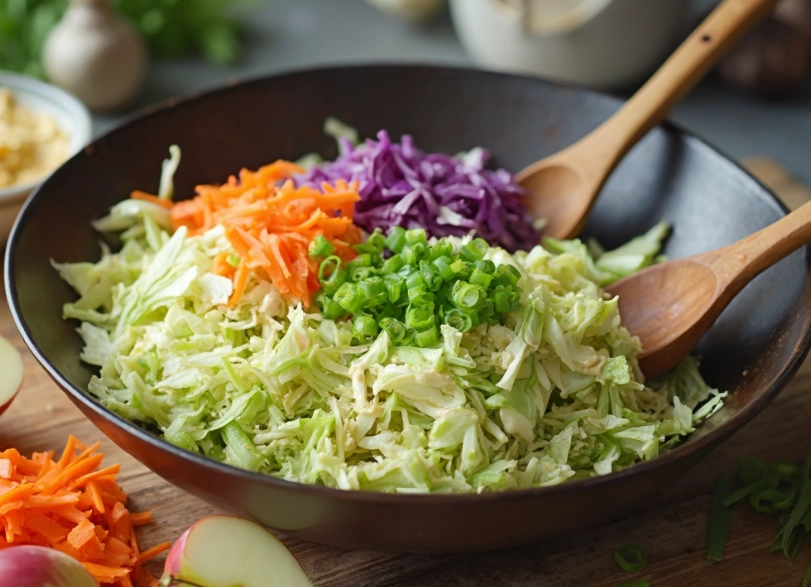
My Rabbit Ate Some Coleslaw: Your Immediate Action Plan
Don't panic, but act quickly. The severity depends on the amount and whether it had dressing.
Step 1: Assess the Damage. How much did they eat? A few shreds of plain cabbage from your plate is a watch-and-wait situation. A tablespoon of dressed coleslaw mix is a bigger concern.
Step 2: Remove All Other Fresh Food & Treats. For the next 12-24 hours, offer only their unlimited hay and fresh water. Hay is the fiber engine that will help move any problematic material through their system. You can encourage eating by sprinkling fresh hay or offering a different cut (orchard vs. timothy).
Step 3: Monitor Like a Hawk. You're looking for:
- Poop Output: Size, shape, and frequency. Any decrease, misshapen poops, or diarrhea is a red flag.
- Appetite: Are they still eating hay? A rabbit not eating is a medical emergency.
- Behavior: Lethargy, hunched posture, teeth grinding (sign of pain), or a hard, silent belly.
Step 4: When to Call the Vet. If your rabbit stops eating or pooping for more than 10-12 hours, becomes lethargic, or shows signs of pain, call your exotic vet immediately. Don't wait until morning. GI stasis can be fatal within 24 hours. Tell the vet exactly what and how much they ate.
Expert Answers to Your Urgent Questions
The bottom line is simple. Coleslaw mix, with its dressings and seasonings, has no place in a rabbit's diet. Plain cabbage is a mediocre, risky choice when superior options abound. Your rabbit's health hinges on the simplicity of their diet: endless hay, a measured cup of fresh, safe greens, and a limited number of pellets. When in doubt, always choose the simpler, more fibrous option. It's the secret to a bunny with a happy, active gut and a long, hoppy life.
Reader Comments