Let's be honest. You're here because something's eating your lettuce, your pet bunny can't be trusted outside for five minutes, or you're staring at a hole in the lawn that wasn't there yesterday. A rabbit fence isn't just a line in the dirt; it's a peace treaty between your green ambitions and a rabbit's natural instincts. I've spent over a decade designing outdoor spaces for rabbits, both to keep them safe in and to keep wild ones respectfully out. The biggest mistake I see? People treating it like a simple garden border. It's not. It's a three-dimensional security system for a creature that's part Houdini, part excavator.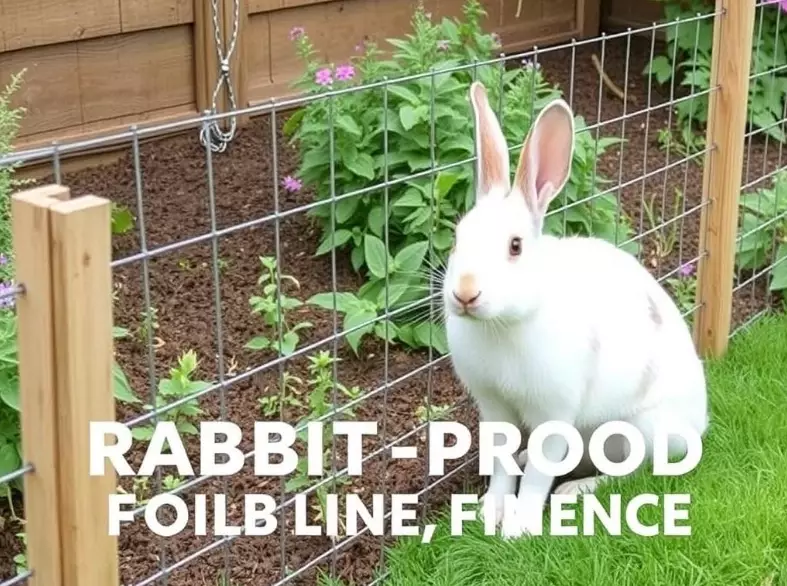
What You'll Find in This Guide
Why a Rabbit Fence is Non-Negotiable
Think of it from the rabbit's perspective. For a wild rabbit, your garden is an all-you-can-eat buffet, unprotected and irresistible. For your pet rabbit, the outside world is full of terrifying dangers: predators, parasites, toxic plants, and the sheer panic of getting lost. A proper fence addresses both sides.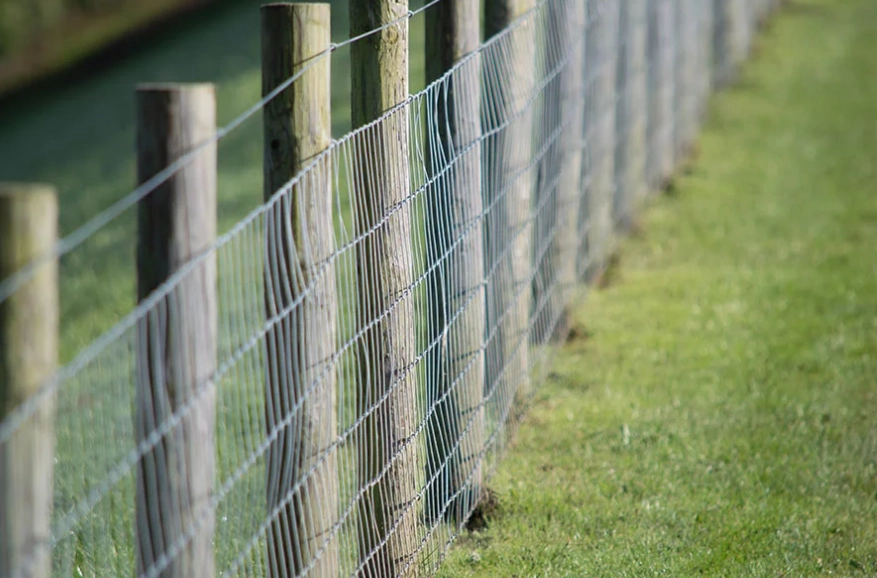
For garden protection, it's about more than just the plants. Rabbits dig, and their burrows can undermine foundations, patios, and shed floors. One client of mine had a family of rabbits turn under her garden shed, causing one corner to sink noticeably. The repair bill was far more than a fence would have cost.
For pet rabbit safety, an outdoor enclosure (often called a rabbit run) is about welfare. Rabbits need space to run, binky, and explore for their mental health. A flimsy, low pen is a prison. A well-built enclosure with a secure fence is a kingdom. The difference is in the details most guides gloss over: the gauge of the wire, the type of gate latch, the treatment of the wood.
The Expert's Reality Check: No fence is 100% rabbit-proof against a determined wild rabbit. Your goal is to make your space so inconvenient and secure that they move on to an easier target. For pet rabbits, the goal is absolute security. Those are two slightly different design philosophies.
Choosing the Right Rabbit Fence Material
This is where most projects go wrong. You can't just use leftover chicken wire and hope for the best. Let's break down the common options, warts and all.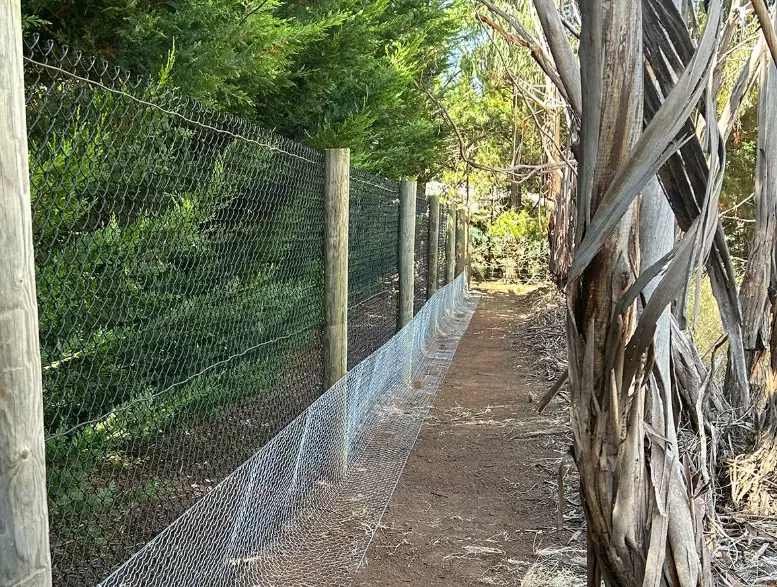
Hardware Cloth (Galvanized Welded Wire Mesh): This is the gold standard, and for good reason. The wires are welded at each intersection, creating a rigid grid. Get a 19-gauge (1mm) or thicker wire with 1/2" or 1/4" mesh. The 1/4" mesh keeps out everything, including baby rabbits and large insects. It's strong, durable, and, while more expensive upfront, lasts for years. The downside? It's stiff and can be harder to work with. You'll need good wire cutters and gloves.
Chicken Wire (Poultry Netting): Here's my controversial take: I almost never recommend standard chicken wire for a primary rabbit fence. The hexagonal mesh is weak, easy to pry apart, and the thin gauge rusts quickly. I've seen rabbits, especially larger breeds or determined wild ones, chew right through it or push it out of shape. It's fine as a temporary barrier or an inner layer to stop chewing on wood, but never as your main defense.
Wooden Framing with Mesh: This is the classic rabbit run setup. You build a frame from 2x2s or similar timber and staple hardware cloth to it. The wood gives structure and allows you to add a roof easily. Use untreated, rabbit-safe wood for any part they might chew. Cedar and redwood are naturally rot-resistant. Pressure-treated wood contains chemicals harmful if ingested, so avoid it for interior framing.
What about plastic fencing or electric nets? Plastic degrades in sunlight and can be chewed. Electric netting is great for temporary rotational grazing for livestock but is too easily shorted out by grass growth and isn't reliable for 24/7 pet containment.
How High Should a Rabbit Fence Be? (And How Deep)
This is the two-part question most people forget the second half of.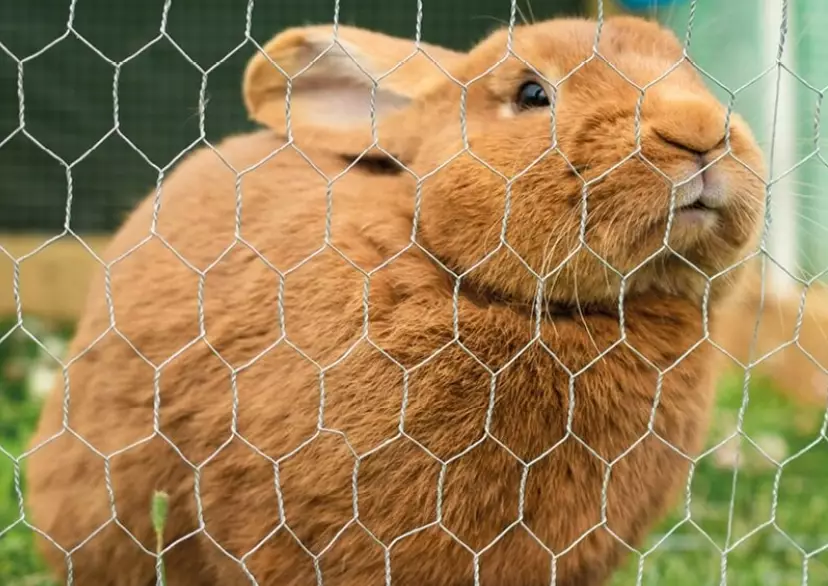
Fence Height: The Vertical Rule
A cottontail rabbit can jump about two feet high from a standstill. With a running start, three feet is easy. For a pet enclosure, I never build walls lower than 3 feet (90cm). For larger, more athletic breeds or areas with lots of wild rabbits, I go to 4 feet (120cm). This isn't just about jumping out; it's also about predators reaching in. A raccoon can easily scale a 3-foot fence.
If you have a jumper—I had a Netherland Dwarf who thought he was a kangaroo—consider adding a roof or an inward-facing overhang at the top. A 12-inch strip of mesh bent inward at a 45-degree angle is a simple, effective deterrent.
Fence Depth: The Underground War
This is the most commonly skipped step, and it's why gardens get invaded. Rabbits dig, and they're good at it. Burying the fence is not optional.
Method 1: The Buried Apron. Extend your hardware cloth at least 12 inches (30cm) outward from the base of the fence, then bury it just a few inches under the soil or pin it down with landscape staples. When a rabbit digs down, they hit the horizontal barrier and give up.
Method 2: The L-Footer. This is more robust. At the base of the fence, bend the hardware cloth into an "L" shape, so it extends outward horizontally for 12 inches, then bends down vertically for another 6-12 inches before being buried. This creates a subterranean wall that's virtually impossible to bypass.
For a permanent pet run on grass, I often dig a narrow trench, sink the fence 12-18 inches straight down, backfill, and then have an outward apron on top. It's more work, but it's a forever solution.
How to Install a Rabbit Fence That Actually Works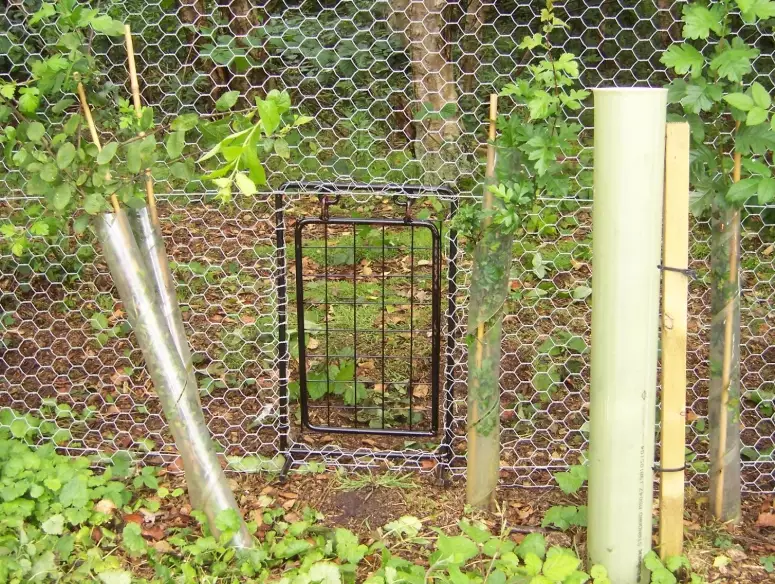
Let's walk through a real-world scenario: securing a 10x10 foot vegetable garden from wild rabbits.
Tools & Materials You'll Actually Need: 50-foot roll of 1/2" 19-gauge hardware cloth (36" height), 8-10 wooden stakes (1"x1" or garden stakes), a box of heavy-duty galvanized staples or u-nails, a mallet, wire cutters, leather gloves, a shovel, and landscape fabric pins.
Step 1: Clear and Mark. Clear weeds and debris from the perimeter. Use string to mark your fence line.
Step 2: The Trench. Dig a shallow trench, about 3 inches deep and 12 inches wide, along the outside of your string line. This is for the buried apron.
Step 3: Stake First. Hammer your stakes into the ground at 4-5 foot intervals along the trench, on the side facing your garden. This gives you something solid to attach to.
Step 4: Attach and Bury. Unroll the hardware cloth. Place it against the stakes so that the bottom 12 inches lies flat in the trench, extending away from the garden. The remaining height runs up the stakes. Staple the cloth securely to every stake, top to bottom. Now, fill the trench back in, burying the horizontal apron. Tamp the soil down firmly. For extra security, pin the apron down with landscape staples every few feet before burying.
Step 5: The Gate (The Weakest Link). Use a pre-made garden gate or build a simple wooden frame covered in the same hardware cloth. The critical detail is the latch and the gap. The latch must be secure—a spring bolt or hook-and-eye, not just a simple catch. The gap at the bottom must be minimal. I often attach a rubber flap or brush strip to the bottom of the gate to sweep the ground.
My personal trick? I run a horizontal board along the top of the fence, stapling the mesh to its underside. This gives a clean finish and prevents the sharp cut ends of the wire from being exposed.
Safety First: Always wear gloves when handling hardware cloth. The cut ends are razor-sharp. After installation, go around and gently bend any protruding sharp wires inward or cover them with a wooden batten.
Keeping Your Fortress Secure: Maintenance Tips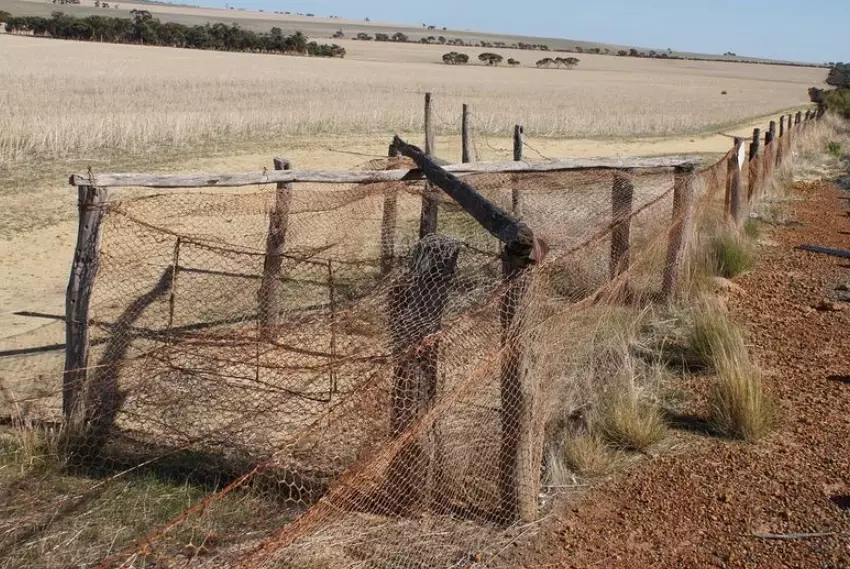
A fence is a living structure. You need to check it.
Every month, do a walk-around. Look for:
Rust spots on galvanized mesh. Touch up with a pet-safe rust inhibitor paint.
Sagging or loose sections, especially after heavy rain or frost heave. Re-staple or re-tension.
Evidence of digging outside the perimeter. If you see fresh dirt, reinforce that area. Sometimes piling a few large rocks or pavers on the ground over the buried apron deters further attempts.
Vegetation growth pushing against the fence. Keep grass and weeds trimmed back. They can provide a climbing ramp for pests and hide damage to your fence.
For wooden runs, check for rot at ground level and any signs of chewing. Replace compromised wood promptly.
Your Rabbit Fence Questions, Answered
 Is an electric fence effective for rabbits?
Comment