You see pictures of Californian rabbits online—those striking white bodies with dark points—and you think, "What a gorgeous, substantial-looking rabbit." Then you start looking into getting one, and the first question that hits you isn't about color or temperament. It's about their physical dimensions. How much space will this animal actually need? How big do Californian rabbits really get? The standard answer, "8 to 10.5 pounds," doesn't tell the whole story. It's like saying a car is "medium-sized"—utterly useless when you're trying to park it in your garage.
Having raised Californians for over a decade, I can tell you their size is their most defining—and most often misunderstood—characteristic. It impacts everything from the cage you buy on day one to the vet bills you might face years later. Let's cut through the vague averages and get into the tangible, measurable reality of Californian rabbit size.
What's Inside: Your Quick Guide
How Big Do Californian Rabbits Get? The Hard Numbers
Forget just weight. To understand their size, you need a three-dimensional picture: weight, length, and height. According to the official American Rabbit Breeders Association (ARBA) standard, a show-quality Californian should weigh between 8 and 10.5 pounds (3.6 to 4.8 kg) as a mature adult. "Mature" means over 8 months old.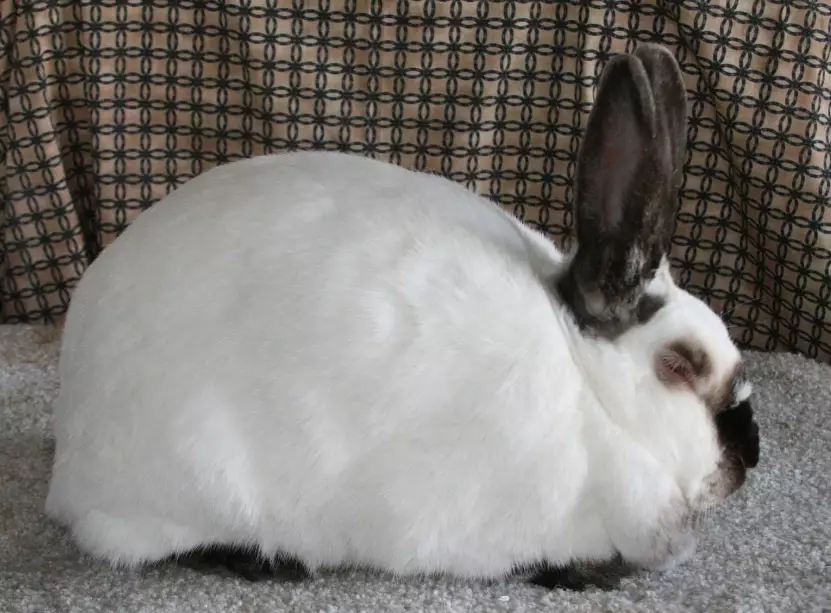
But here's the first non-consensus point: pet Californians often fall outside this range. I've cared for perfectly healthy, fixed pets that settled comfortably at 7.5 pounds, and others that pushed 11.5 without being fat—just big-boned and long. The 8-10.5 lb range is a show ideal, not a biological law.
So, what about length and height? This is where most guides get silent. A stretched-out adult Californian, from the tip of its nose to the base of its tail (not including the tail itself), typically measures between 18 and 22 inches (46 to 56 cm). Their height at the shoulders, when sitting normally, is usually 8 to 10 inches (20 to 25 cm).
Why does this matter? That length directly dictates the minimum floor space they need in a cage or pen. A 24-inch cage is too short for a 22-inch rabbit to lie down fully stretched. It's a simple math problem most new owners don't think to solve.
How to Accurately Measure Your Californian Rabbit
You can't manage what you don't measure. Weighing is straightforward: use a digital kitchen scale for babies, and a pet scale or the "hold-and-weigh-yourself" method for adults. For length and height, you need a soft measuring tape and a cooperative bunny.
Measuring Length: Wait until your rabbit is relaxed and stretched out, maybe after a nap. Gently run the tape from the nose, along the spine's curve, to the point where the tail begins. Don't force a straight line—rabbits are curved creatures. This gives you their "living length."
Measuring Height: Get them in a natural, alert sitting position. Measure from the floor to the highest point of their shoulder blades (the withers). Don't include ears. This height tells you how tall their litter box sides can be before they become a hurdle.
Californian Rabbit Size vs. Other Popular Breeds
"Large breed" is a category, but it contains multitudes. Seeing how the Californian stacks up against others makes its size concrete.
| Breed | Average Weight | Size Category | Key Difference from Californian |
|---|---|---|---|
| Netherland Dwarf | 2 - 2.5 lbs | Extra Small | Less than 1/4 the mass of a Californian. |
| Holland Lop | 3 - 4 lbs | Small | A Californian is roughly 2.5 times heavier. |
| Rex | 7.5 - 10.5 lbs | Medium/Large | Very similar weight range, but Rex rabbits often have a more compact, rounded body shape. |
| Californian | 8 - 10.5 lbs | Large | The baseline for comparison. A lean, commercial "cylinder" body type. |
| Flemish Giant | 14+ lbs | Giant | A Californian is like a compact car next to an SUV. Flemish require significantly more space and resources. |
The Californian's real "sweet spot" is that it's one of the largest common breeds that still retains a relatively streamlined, manageable frame. They're big, but not cumbersome like some giants can be. A Flemish Giant isn't just heavier; its bone structure is massive, requiring wider doorways and sturdier furniture.
Caring for a Large Breed: The Size-Driven Checklist
Their size isn't just a statistic; it's a care manual. Get these things wrong, and you'll have an unhappy, potentially unhealthy rabbit.
Housing and Space: The Non-Negotiables
The absolute minimum enclosure size for a Californian, per the House Rabbit Society, is 12 square feet of continuous space, plus a separate exercise area for several hours daily. In practical terms, that means a pen or cage at least 4 feet by 3 feet. My strong recommendation? Go bigger. A 4x4 or 5x3 pen is a game-changer for their mobility and mood.
The cage floor must be solid. Wire flooring can cause severe pressure sores (pododermatitis) in heavy breeds. This isn't a minor risk; it's a common, painful vet issue.
Diet for a Big Body
Californians don't need more pellets than a smaller rabbit; that's a fast track to obesity. They need the right type of food. Unlimited, high-quality grass hay (Timothy, Orchard) is critical for two reasons: 1) fiber for gut motility, which is crucial in large breeds prone to GI stasis, and 2) the constant chewing wears down their large teeth correctly. Their pellet portion should be measured—about 1/4 cup of plain pellets per 5 lbs of body weight daily for an adult.
Health Considerations Tied to Size
Large breeds are statistically more prone to arthritis as they age. Providing low-entry litter boxes, ramps instead of jumps, and soft resting surfaces is proactive care, not spoiling. Their weight also means falls are more dangerous. Slippery hardwood or tile floors are a hazard; use rugs or mats.
One subtle mistake I see: people assume a big rabbit is a strong, indestructible rabbit. The opposite is often true. Their size can make them more vulnerable to skeletal stress and heatstroke. Handle them with full support—never by the scruff—and ensure their space is always cool and well-ventilated.
Your Top Californian Rabbit Size Questions, Answered
Understanding Californian rabbit size is about moving beyond a single number. It's about visualizing the space they'll occupy, anticipating the care their stature demands, and appreciating them as the substantial, wonderful companions they are. Their size is a commitment, but for the right home, it's also a big part of their charm.
Comment