What's Inside?
Picture this: a soft, fluffy creature hopping through a meadow. It's the image most of us have. Now, replace that meadow with a dustbowl in Australia, a denuded island in the Pacific, or a farmer's field in Chile where nothing grows. That's the other, far more accurate picture of the European rabbit (Oryctolagus cuniculus). This isn't about a cute pet; it's about one of the most successful and destructive invasive mammals on the planet. The story of the European rabbit as an invasive species is a masterclass in unintended consequences, ecological disruption, and the immense challenge of putting a genie back in the bottle.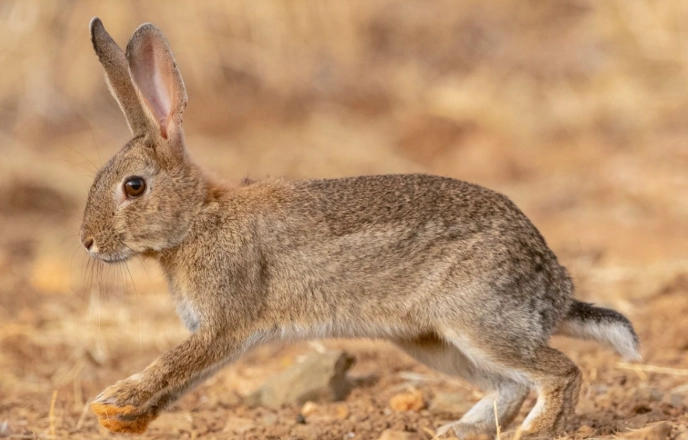
I've spent years looking at the data, visiting affected regions, and talking to land managers. One thing most articles get wrong is framing this as just an "Australia problem." It's a global template for how a generalist herbivore with a ridiculous reproductive rate can overwhelm ecosystems that never evolved to handle it. The real cost isn't just in lost crops; it's in lost species, altered fire regimes, and soil that turns to dust.
From Pet to Pest: A Brief History of Invasion
Rabbits are native to the Iberian Peninsula and southwest France. So how did they get everywhere else? Us. Humans are the ultimate vector. Starting in the Roman era, rabbits were moved around as a food source and for sport hunting. The real explosion began with European colonization.
The most famous case study is, of course, Australia. In 1859, a British settler named Thomas Austin released 24 rabbits on his property in Victoria for hunting. He famously wrote, "The introduction of a few rabbits could do little harm and might provide a touch of home, in addition to a spot of hunting." It's a statement that now reads like ecological satire. Those 24 rabbits, in the absence of natural predators and in ideal conditions, exploded. Within a decade, they were spreading across the continent at a rate of over 100 kilometers per year. By the 1920s, their population was estimated in the billions.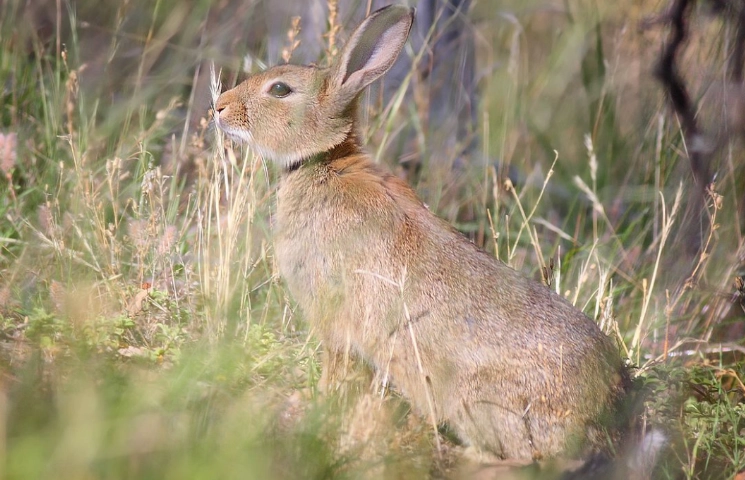
A Critical Misconception: Many people think the problem was just the initial release. The bigger issue was the perfect storm: incredibly fertile soil for burrowing, abundant food, a climate they could tolerate, and a landscape cleared for farming that created endless edge habitat. Australia handed them a blank check, and they cashed it with exponential interest.
Similar, if less dramatic, stories played out in New Zealand, Chile, Argentina, and on countless islands. Wherever Europeans went, rabbits often followed, either deliberately released or escaping from captivity.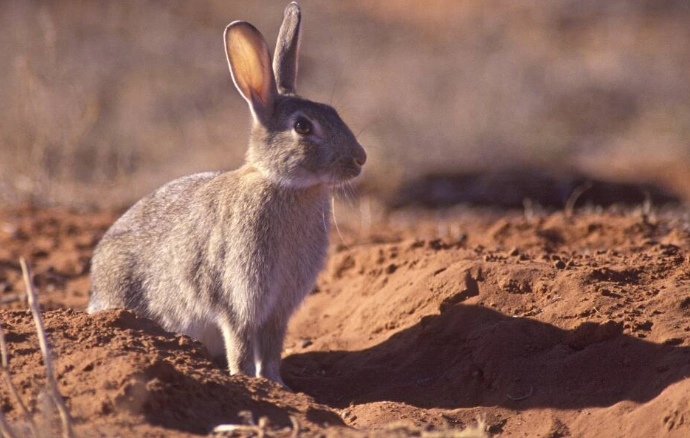
The Staggering Ecological and Economic Toll
Let's talk numbers, because the impact is almost too big to visualize. Rabbits are eating machines. A single rabbit can eat about a square meter of vegetation in a night. Multiply that by millions.
How Rabbits Reshape an Ecosystem
They don't just eat grass. They selectively graze on the most palatable native seedlings and plants, preventing forest regeneration and giving tough, unpalatable weeds a competitive advantage. They ringbark young trees. Their intense grazing removes the ground cover, leading to catastrophic soil erosion. When the topsoil blows or washes away, nothing can grow back—not even the rabbits' food. They literally eat themselves out of house and home, creating a barren landscape.
This has a cascading effect. Native animals that rely on that vegetation for food or shelter disappear. The loss of ground cover increases the severity and spread of wildfires. According to research compiled by Australia's national science agency, CSIRO, rabbit grazing is a key threat to over 300 threatened plant and animal species in Australia alone.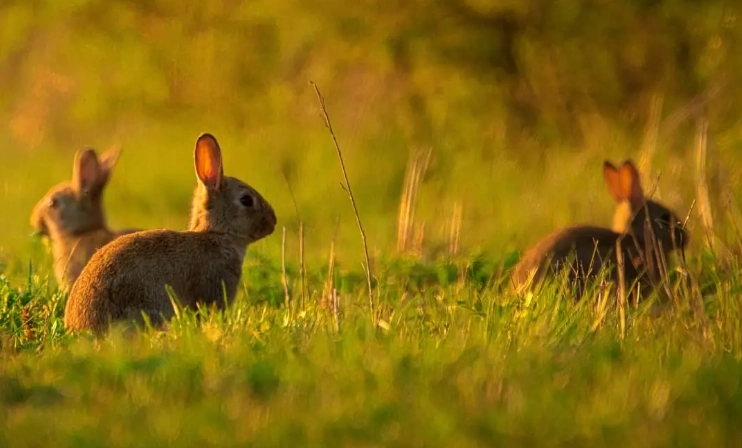
The Bill Comes Due: Economic Costs
The financial damage is measured in the hundreds of millions annually, globally. It breaks down into:
| Cost Category | Specific Impact | Scale (Annual Estimate) |
|---|---|---|
| Agricultural Losses | Direct consumption of crops (cereals, horticulture), competition with livestock for pasture, damage to vineyards and young orchards. | $200+ million in Australia (pre-control estimates were far higher). |
| Infrastructure Damage | Undermining of roads, railway embankments, and building foundations through extensive burrowing ("warrens"). | Massive repair bills; difficult to quantify but consistently significant. |
| Control Expenditure | Government and private spending on fencing, poisoning programs, biological control research, and monitoring. | Tens of millions spent by governments and landowners. |
| Biodiversity Management | Costs of protecting endangered species habitats from rabbit impacts, including predator-proof fencing and habitat restoration. | Embedded in conservation budgets, often a primary expense. |
I remember speaking to a farmer in New South Wales who showed me a field that should have been lush. It was dust and a few scraggly weeds. "The rabbits got it first," he said, not with anger, but with a tired resignation. "Every green shoot, gone. It's like farming against a silent, furry tide."
Control Methods: The Ongoing Battle
So, what do you do when you have billions of an invasive animal? You throw everything at it. Australia's struggle is a history of evolving, and often desperate, control strategies.
1. Physical and Mechanical Control
Warren Ripping: The most effective long-term physical method. After reducing rabbit numbers (usually with poison), a bulldozer with a ripping tine is used to destroy the burrow systems. It's labor and fuel-intensive but crucial for reclaiming land.
Fencing: The iconic "Rabbit-Proof Fences" of Australia (like the 1,833 km State Barrier Fence in Western Australia) are monuments to this approach. They can work to protect high-value areas but are incredibly expensive to build and maintain. Rabbits can burrow under them, and floods can breach them.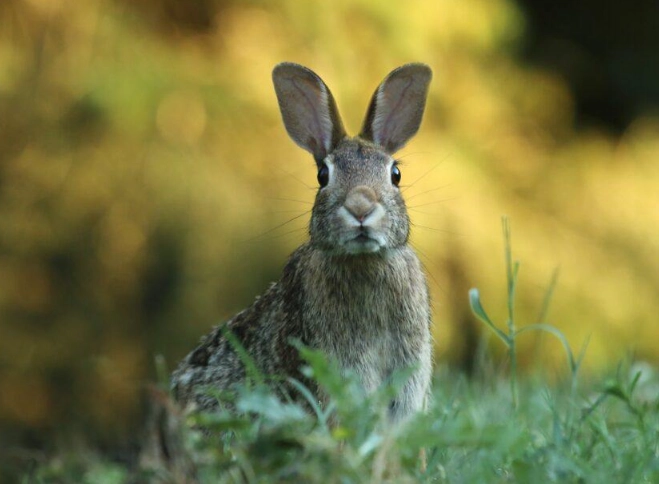
2. Chemical Control
The primary tool for large-scale population reduction. The most common is sodium fluoroacetate (1080), which is naturally found in some Australian plants, making native wildlife somewhat tolerant. It's delivered via poisoned bait (carrots, oats). Pindone, an anticoagulant, is also used, especially in areas near towns.
The Expert Mistake: Novices think a single poisoning campaign is the solution. It's not. If you don't follow up with warren destruction and sustained monitoring, survivors will breed back to pre-poison levels in a single good season. Control is a long-term commitment, not a one-off event.
3. Biological Control: A Controversial Savior
This is where the story gets ethically complex and scientifically fascinating.
- Myxoma Virus (released 1950): Initially over 99% effective. It was a shock to the system that bought decades of breathing room. But rabbits evolved resistance, and the virus evolved to be less lethal (a dead host doesn't spread the virus well). Its effectiveness waned.
- Rabbit Haemorrhagic Disease Virus (RHDV1 - released 1995, RHDV2 - arrived 2015): The current front-line biocontrol. RHDV1 (also called calicivirus) caused significant, sustained reductions. RHDV2, a related but distinct strain that arrived naturally, provides additional pressure. These viruses are now endemic in the rabbit population.
The release of these agents is studied exhaustively by organizations like the CSIRO to ensure they are rabbit-specific. The impact report from the initial RHDV1 release is a landmark document in invasive species science. Biological control doesn't eradicate rabbits, but it lowers the "background" population, making other methods more feasible and cost-effective.
Beyond Australia: A Global Problem
While Australia is the poster child, rabbits are a severe invasive species in other regions. In the sub-Antarctic islands like Macquarie Island, they stripped the vegetation, causing massive seabird habitat loss and erosion until a multi-million dollar eradication program (using helicopters to drop precise poison bait) finally succeeded. In Chile and Argentina, they threaten unique Patagonian ecosystems. Even in parts of Europe outside their native range, like the UK where they were introduced by the Normans, they are considered a pest in agricultural contexts.
What's Your Role in This Story?
You might think this is a problem for governments and farmers. But public perception matters.
If you live in an affected area: Cooperate with local control programs. Don't feed wild rabbits—it undermines population control. Secure your garden with rabbit-proof fencing (buried at least 15 cm deep). Report large warrens to local land management authorities.
If you keep rabbits as pets: This is critical. Never, ever release a domestic rabbit into the wild. It's not "setting it free"; it's introducing an invasive species and is often illegal. If you can't care for it, surrender it to a rescue. The domestic rabbit is the same species (O. cuniculus) and can interbreed with wild populations. Responsible pet ownership is a direct action against invasion.
As a traveler: Be aware of biosecurity. Don't transport animals or plants between regions. The next invasive disaster could start with a seemingly innocent act.
Your Questions on Rabbit Invasion Answered
Are there any places where introduced rabbits haven't been a problem?
I think rabbits are damaging my garden. How can I tell if it's them and not another animal?
With diseases like RHDV, is it ethical to use biological control?
What's the one biggest mistake communities make when trying to deal with a new rabbit invasion?
Comment